If you are evaluating GetImg's image API — or already building on it — the real question is rarely "is GetImg good?" It is "which model gives me the quality, prompt accuracy, and price my project needs, and how painful is it to switch?" This post answers that for three models you can call on hiapi today: flux-2, Nano Banana 2, and z-image. Every image below is a real, one-shot generation on the same prompt — no cherry-picking, no re-rolls.
Short version: across two stress tests — a hand-lettered chalkboard sign (text rendering) and a pour-over scene with an exact object count (prompt adherence) — all three models produced usable results. The differences were specific. Nano Banana 2 gave the richest, most "shot-in-a-real-place" scenes; flux-2 was the cleanest and most literal; z-image, at roughly a fifth of the price, kept up on composition but slipped on one word of text.
What GetImg is, and why teams look for an alternative
GetImg is an all-in-one AI image and video platform with a pay-as-you-go developer API: you generate a key in its dashboard, pay per request with no subscription or minimum on the API, and each model lists its own per-resolution rate (image generation starts around $0.015 per image, per GetImg's published API pricing as of October 2026). Its API catalog has grown to overlap heavily with other aggregators — the Nano Banana, GPT Image, Seedream, and Qwen Image families on the image side, plus a set of video models.
That overlap is exactly why "GetImg API alternative" is a real search. When catalogs converge, the decision stops being about which platform has the model and starts being about the things that actually differ: the price on the specific model you call, how many keys and request formats your team has to learn, and whether you can A/B the same model somewhere else. hiapi is one such option — one API key, one async task endpoint for every image and video model, and pay-as-you-go pricing. If GetImg already fits your stack, there is no reason to switch for its own sake. This is an alternative, not a takedown.
The three hiapi models in this comparison
- flux-2 — high fidelity and strong prompt adherence; the one to reach for when the brief is literal. From $0.0375 per image. See the flux-2 model page.
- Nano Banana 2 — photoreal, context-rich scenes with solid in-image text and up to 4K output. From $0.036 per image at 1K. See the Nano Banana 2 model page.
- z-image — a turbo text-to-image model built for speed and volume at a flat $0.008 per image. See the z-image model page.
These are the headline numbers; full per-resolution tiers for every model live on the hiapi pricing page.
How we tested
Same prompt to all three models, one generation each, no re-rolls and no best-of picks. Two scenes, each probing a different axis that matters to anyone shipping images at scale:
- Text rendering — a chalkboard sign with two specific lines of copy. Can the model spell?
- Prompt adherence and quality — a product scene with an exact object count ("exactly three beans") and a specified color and material. Does it follow instructions and still look real?
Everything was generated through hiapi's /v1/tasks endpoint. Images are clickable — open them to judge at full size.
Round 1: Text rendering — the chalkboard test
| flux-2 | Nano Banana 2 | z-image |
|---|---|---|
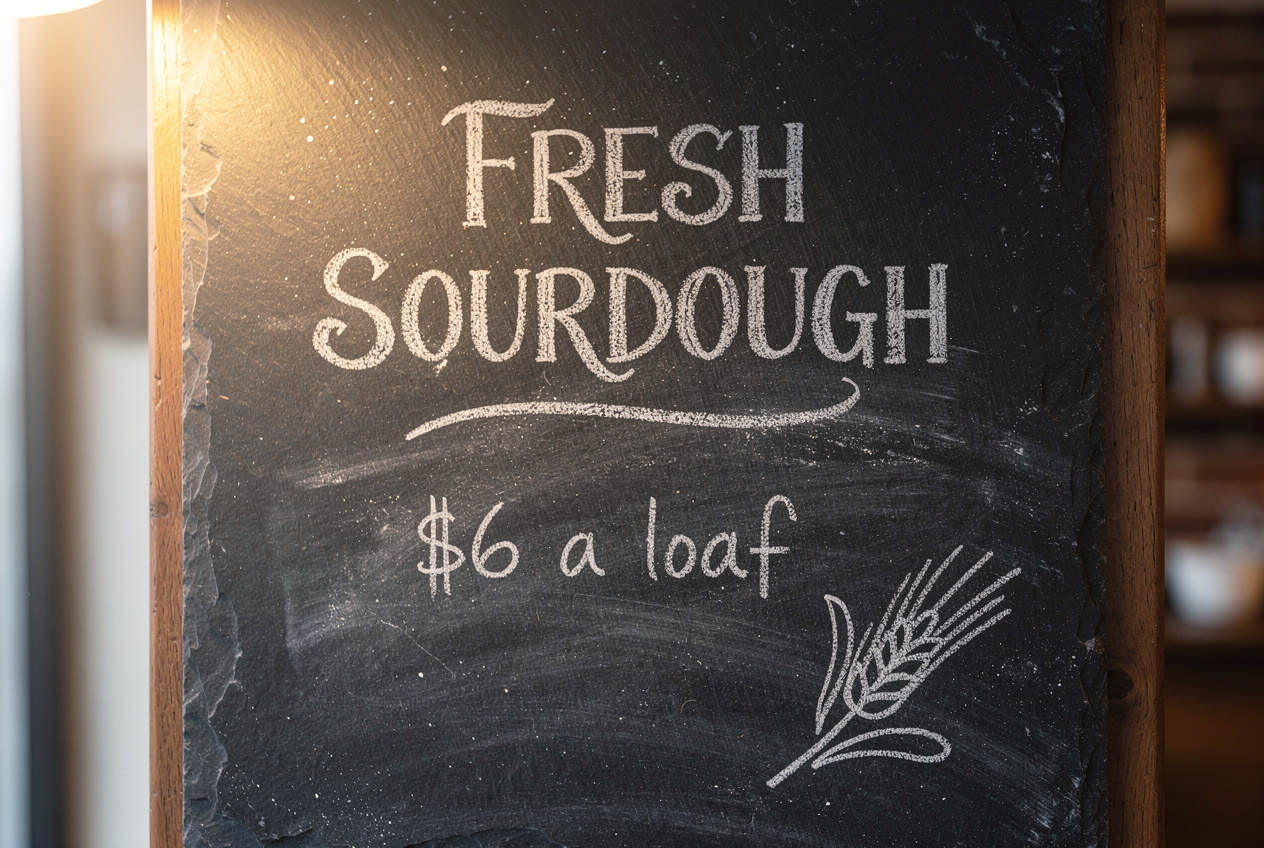 | 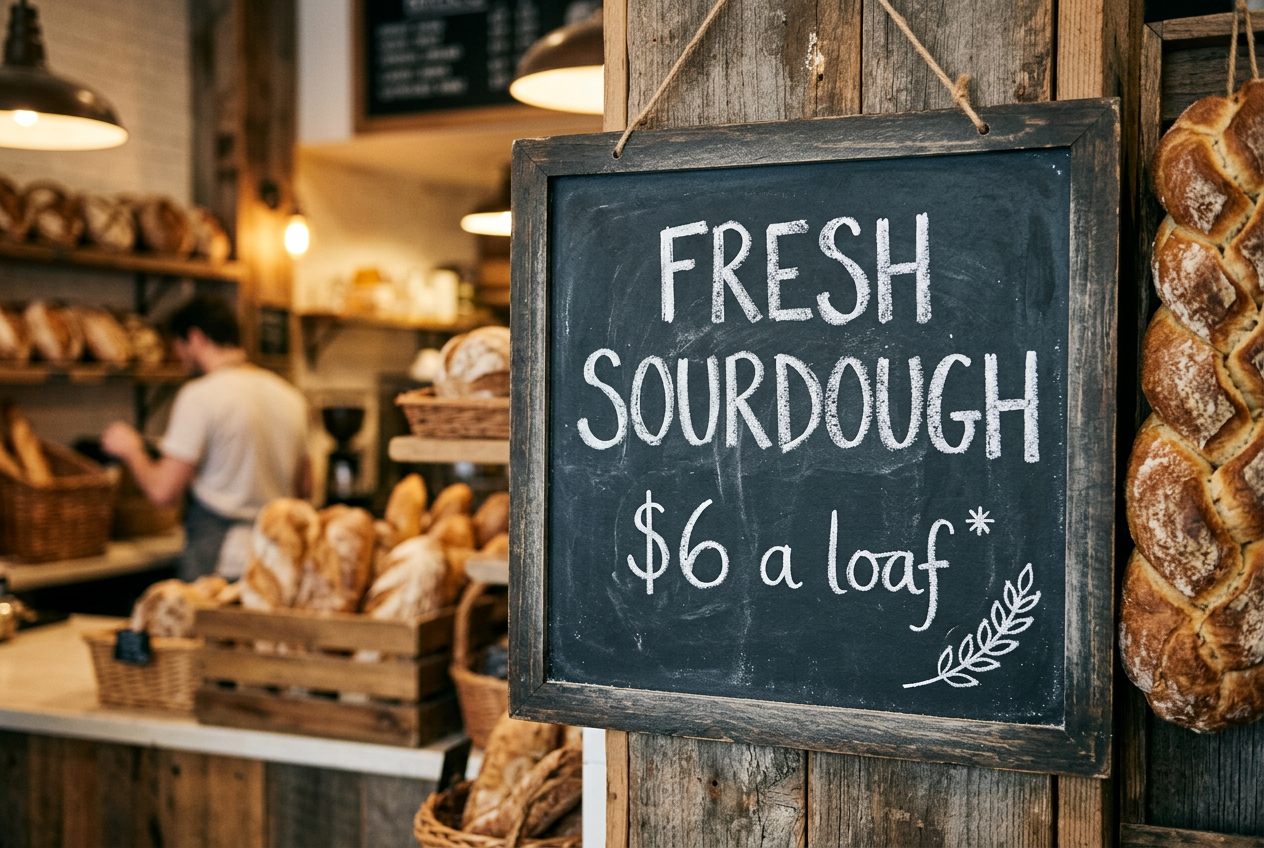 | 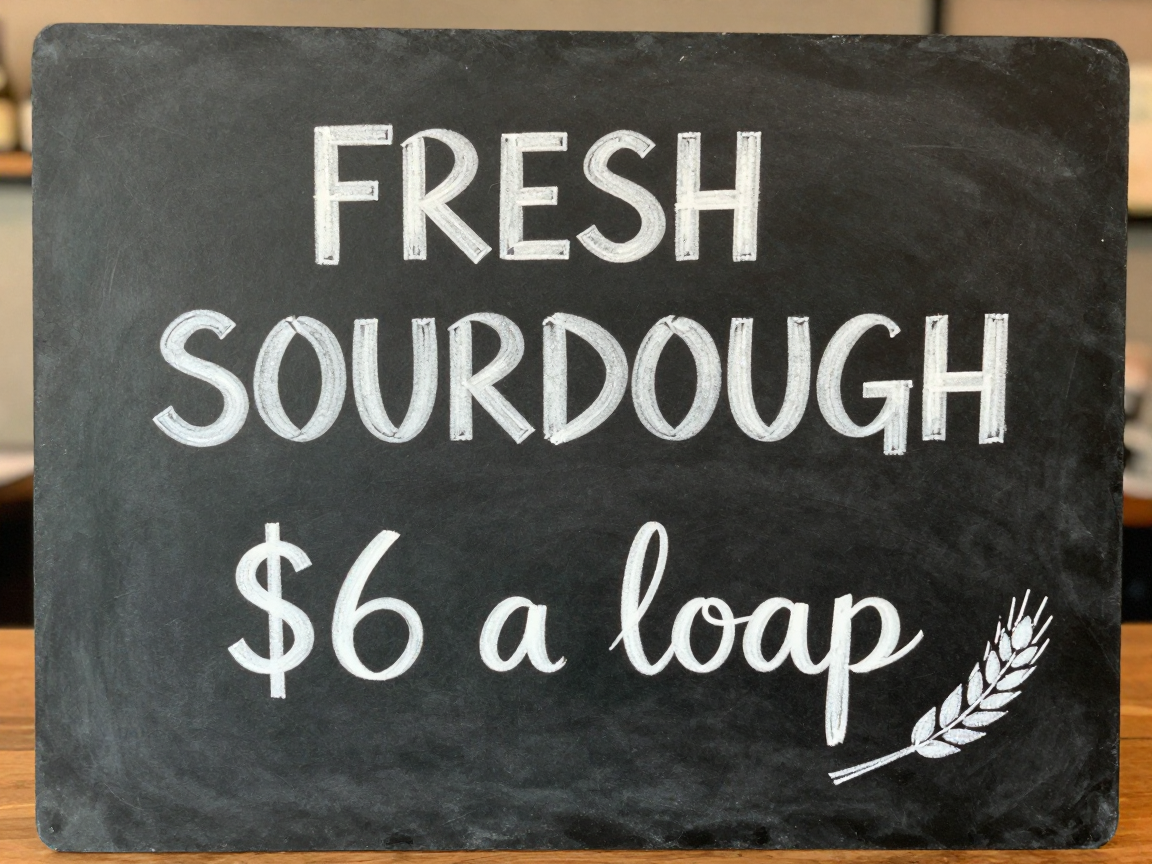 |
A dark slate chalkboard bakery sign, hand-lettered in white chalk. Top line reads "FRESH SOURDOUGH", bottom line reads "$6 a loaf". A small wheat-sprig doodle in the bottom-right corner, warm cafe lighting, photorealistic
flux-2 nailed both lines — "FRESH SOURDOUGH" and "$6 a loaf" spelled correctly in a decorative chalk serif, with the wheat-sprig doodle present. Clean and legible.
Nano Banana 2 also spelled both lines correctly and went furthest on realism: it placed the sign inside a full bakery scene — loaves on shelves, a baker at the counter, warm pendant light. If you want an image that reads as photographed rather than generated, this is the one.
z-image got "FRESH SOURDOUGH" right but rendered the second line as "$6 a loap" — one letter off. The lettering itself is crisp and the composition is clean, but for signage, or any copy that has to be exact, that single slip is the kind of thing you have to catch.
The takeaway: for in-image text, flux-2 and Nano Banana 2 were reliable here; z-image is fast and cheap but earns a proofreading pass. That rule holds for every model, not just the cheap one — generate, then check the letters before you ship.
Round 2: Prompt adherence and quality — the pour-over test
| flux-2 | Nano Banana 2 | z-image |
|---|---|---|
 |  |  |
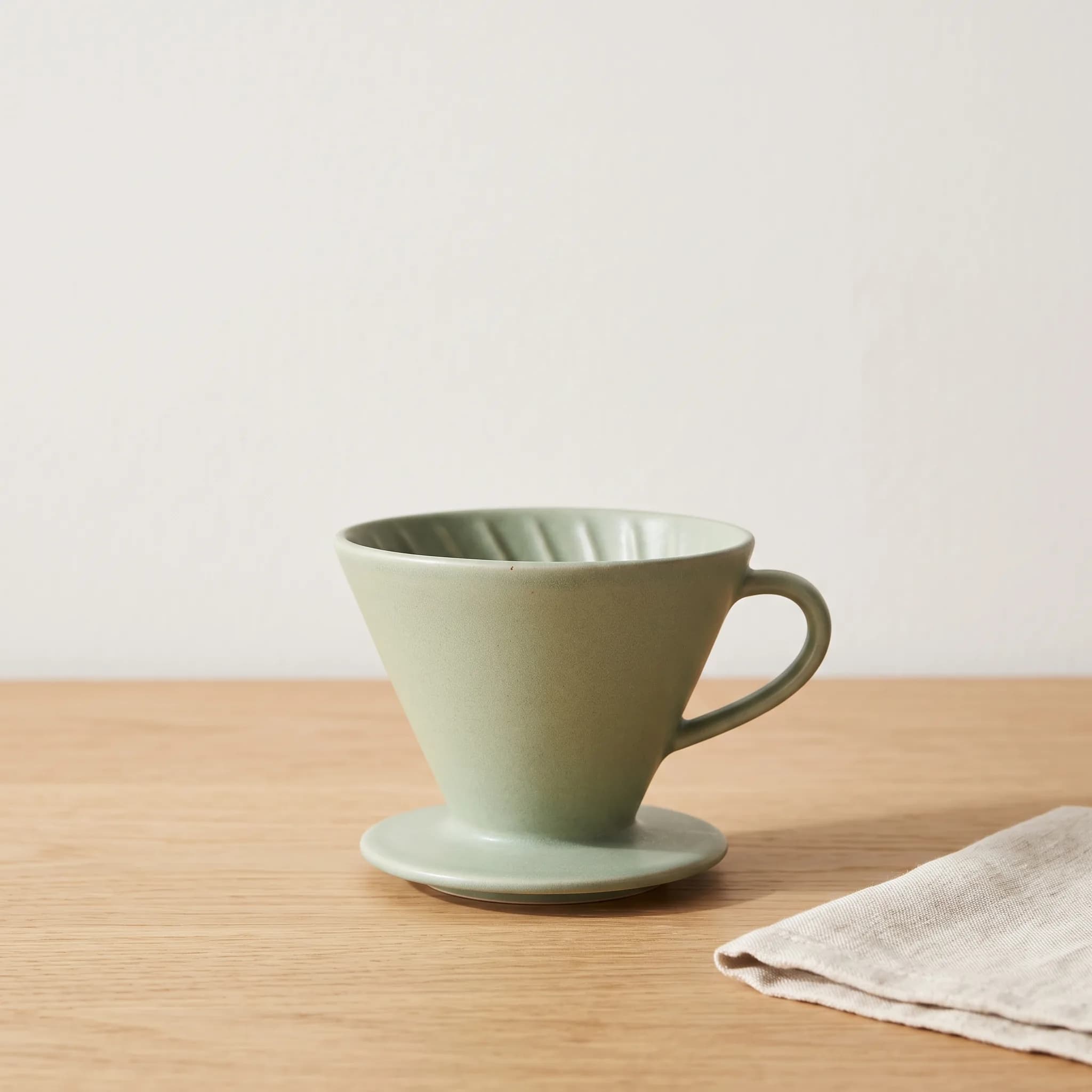
A single matte sage-green ceramic pour-over coffee dripper on a light oak wood table, exactly three whole roasted coffee beans lined up in a row in front of it, a folded white paper filter tucked inside the dripper, soft morning light from the left, shallow depth of field, photorealistic, clean minimal background
All three respected the hard constraint — exactly three beans, a folded filter, sage-green ceramic, an oak table, soft side light. None added a fourth bean or dropped the filter, which is the most common way these prompts fail.
flux-2 produced the most literal, precise read: three beans in a clean, evenly spaced row and tack-sharp focus on the vessel.
Nano Banana 2 again added the most atmosphere — a window, a plant, believable morning light — the most catalog-ready frame of the three.
z-image held its own: a proper ceramic cone dripper, the correct bean count, and clean depth of field — a strong result for a model at $0.008.
The takeaway: on instruction-following the three were close. flux-2 edges precision, Nano Banana 2 edges realism and context, and z-image delivers a correct, usable frame for a fraction of the cost.
Price and integration cost
| Model | Headline price | Best for |
|---|---|---|
| z-image | $0.008 / image (flat) | Speed and volume: drafts, variations |
| Nano Banana 2 | from $0.036 / image (1K) | Photoreal scenes, in-image text, up to 4K |
| flux-2 | from $0.0375 / image (0.5MP) | Literal prompt adherence, high fidelity |
For reference, GetImg's API starts around $0.015 per image and bills per request at per-model rates (per its published pricing, October 2026). The practical point for a GetImg user: z-image undercuts that floor for high-volume drafting, while Nano Banana 2 and flux-2 sit in a comparable band when you need the extra quality. Full per-resolution tiers for every hiapi model are on the pricing page.
Integration is the other half of switching cost. On hiapi, every image and video model — the three here plus the rest of the catalog — runs through one async contract: POST a task, poll it, download the result.
curl -s -X POST https://api.hiapi.ai/v1/tasks \
  -H "Authorization: Bearer $HIAPI_KEY" \
  -H "Content-Type: application/json" \
  -d '{
    "model": "z-image",
    "input": { "prompt": "A dark slate chalkboard bakery sign ...", "aspect_ratio": "3:2" }
  }'
# -> { "data": { "taskId": "tk-..." } }
# then GET https://api.hiapi.ai/v1/tasks/{taskId} until it finishes, and download output[0].url
Swap "model": "z-image" for "flux-2/text-to-image" or "nano-banana-2" and the shape of the call stays the same. That single contract across models is the main thing that makes moving between them — or off another provider — cheap.
Which model should you pick?
- High-volume drafting, thumbnails, variations → z-image. Cheapest by a wide margin; just proofread any text.
- Marketing scenes, lifestyle and product shots, signage with copy → Nano Banana 2. The most photoreal, the most reliable on in-image text, and up to 4K.
- Literal briefs, exact composition, maximum fidelity → flux-2.
A pattern that works well: draft with z-image to explore options, then re-render the winner on Nano Banana 2 or flux-2 for the final.
FAQ
Do I need a subscription to use the hiapi API? No. It is pay-as-you-go with a single self-serve key — the same model as GetImg's developer API in that respect.
Can I call the same models I used on GetImg? The catalogs overlap (the Nano Banana family, for example). On hiapi you call them through one /v1/tasks endpoint; see the Nano Banana 2 API guide.
Is z-image good enough for production? For drafts, variations, and many social and product frames, yes — at $0.008 it is built for volume. For exact text or hero images, step up to Nano Banana 2 or flux-2. There is more detail in the z-image deep dive.
How is this different from other "alternative" pages? It uses the same fair, use-case approach we took for fal.ai: a comparison to help you choose, not a takedown.
The bottom line
If you are on GetImg or sizing it up, hiapi is a straightforward alternative: overlapping models, one key, one async endpoint, and pay-as-you-go pricing — plus a cheap turbo option in z-image that most catalogs do not match on price. Start with the model that fits your job: flux-2 for literal fidelity, Nano Banana 2 for photoreal scenes and text, or z-image for volume — and check live rates on the pricing page.