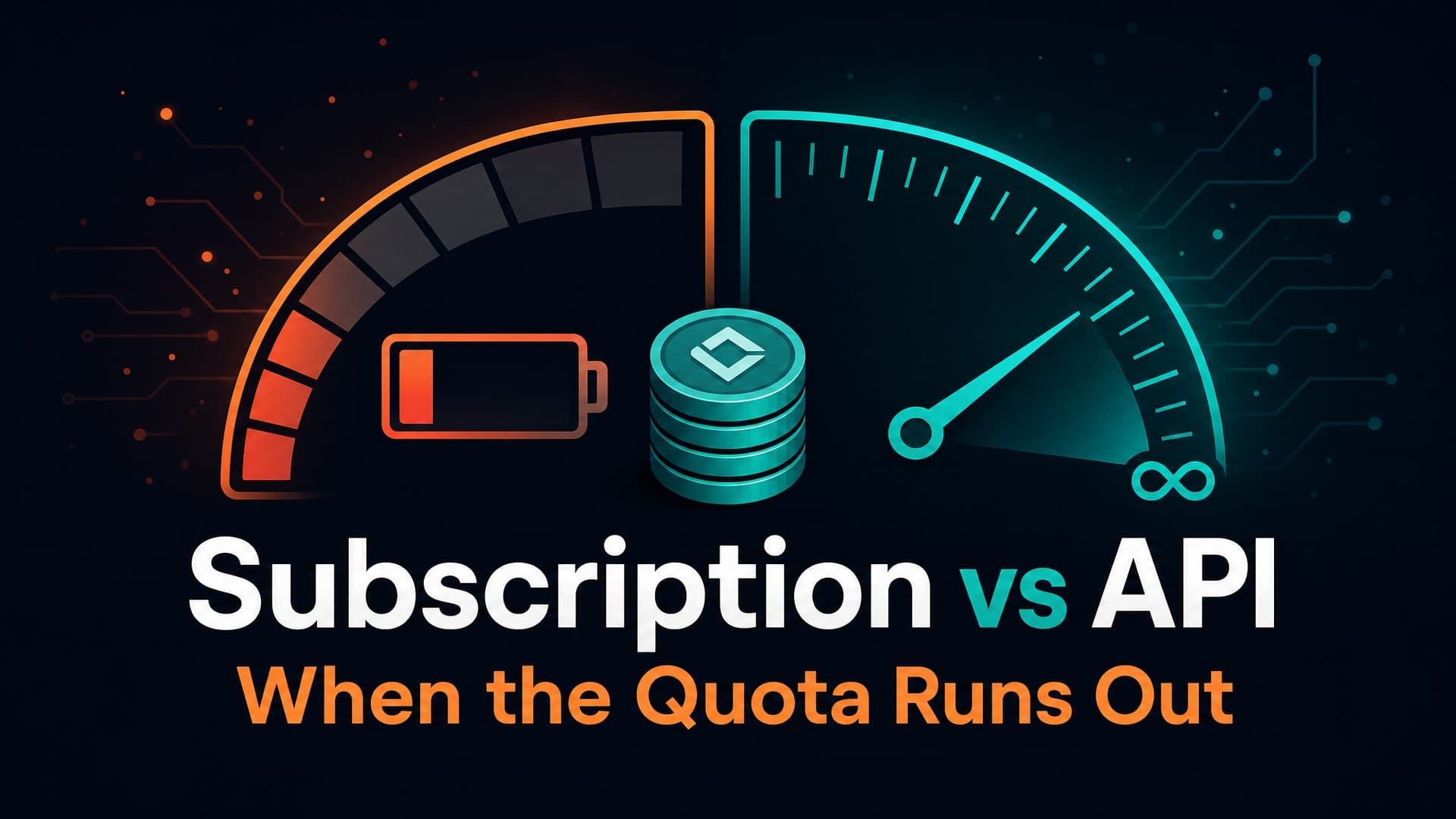
A post on X with 1,166 likes asked a pointed question: Claude Code and ChatGPT are available directly, so why do people still pay more for Lovable, Bolt, or Replit. Original post: https://x.com/kirtandopamine/status/2116987390204198928 by govi (@kirtandopamine).
Here is both sides of that argument, and then what the same question means when it is aimed at an API gateway.
The two sides
The skeptics: the underlying models belong to someone else, so these tools are packaging. The command line already does the same work. What exactly is being paid for.
The defenders cluster around three points:
- Hosting, authentication, and database wiring are real barriers for people who do not write code. Not reluctance to learn, but getting stuck and stopping
- Going from "I have an idea" to "my friend can open a link" involves deployment, domains, and database permissions. Bundling collapses that into one step
- Someone did the math: Claude Code plus Vercel plus Supabase subscriptions stack up to not much less than these platforms charge (that figure is a personal estimate in the thread, not verified against current pricing)
One reverse take is worth noting: some argue users will pay a premium just to avoid the terminal, possibly up to three times as much, because learning cost is a real cost. That thread offers no calculation either.
Where the argument actually lands
Not on whether middle layers have value. Any layer exists because it removes some complexity.
The real disagreement is whether the complexity being removed is something you were already paying to carry.
A backend engineer using Lovable is paying for work they already know how to do. A product manager trying to turn an idea into a clickable link genuinely cannot handle that wiring, and the money is well spent.
The same product is worth very different amounts to different people. That is why these debates never resolve.
The same question, aimed at API gateways
API aggregation platforms face the identical challenge: the models belong to vendors, so what justifies the middle.
The honest answer is that a gateway removes a different category of complexity than Lovable does.
| Complexity removed | Removed by |
|---|---|
| Deployment, domains, auth, databases | App platforms (Lovable, Bolt, Replit) |
| Channel selection, price comparison, model switching, unified billing | API gateways |
Concretely, a team using several models without a gateway deals with:
- One key per vendor, each with its own console
- Trying three models for one requirement means maintaining three call paths
- Bills scattered across dashboards, so monthly cost attribution is a spreadsheet exercise
- When a vendor rate-limits or fails, switching means code changes
None of that is "we cannot do it." It is "doing it produces no differentiation." Time spent here is time not spent on the product.
What a gateway should not claim
Since the point is to answer directly, here are the limits:
A gateway does not make models smarter. Model capability comes from the vendor. A different door does not change it.
A gateway does not solve your engineering problems. Prompt design, context management, retry logic remain yours.
Gateway pricing advantages have preconditions. Lower prices usually come from channel deals and volume, not magic. Prices change, so long-term budgets cannot assume a discount persists.
An extra hop means an extra place to debug. Pick a platform with transparent usage logs and clear error attribution.
How to decide
A simple test: if you spend more than half a day per week on model selection, key management, and bill reconciliation, a gateway is saving you time. If you use one model and burn a few hundred thousand tokens a month, direct connection is simpler.
Same logic as the original post: judge a middle layer by whether the complexity it removes is one you were paying for.
FAQ
Are Lovable and Bolt middlemen?
By business model, yes, they package models and infrastructure. The label itself is not an insult. The question is whether the complexity they remove matters to you.
Can a project built on Lovable be moved?
Depends on export completeness. Before choosing a platform, confirm code exports and database migration paths. That matters more than price.
Could an API gateway raise prices or disappear?
It is a real risk, which is why you keep the call layer thin: model names and endpoints in configuration, so switching platforms is a small change. That applies to any external dependency.
How long does it take to build your own gateway?
Connecting three to five models with unified auth and usage tracking takes one person several days to a week. Every new model afterward needs its own adapter. Whether that is worth it depends on whether you keep adding models.
Bottom line
The 1,166-like post raised a real question but framed it too narrowly. The test is not "is this a middleman" but "is the complexity it removes something I am currently paying to carry." App platforms remove infrastructure setup. Gateways remove channel and billing overhead. Both have customers, both have people who do not need them. Knowing where you are stuck beats arguing about labels.
Sources
- Original debate: govi (@kirtandopamine), https://x.com/kirtandopamine/status/2116987390204198928
- Counterpoint one: Jean Vargas (@JE4NVRG), https://x.com/JE4NVRG/status/2117023071647199640
- Counterpoint two: Jarod Gabriel (@JarodGabriel), https://x.com/JarodGabriel/status/2117130526423429582
- Counterpoint three: Sumedh (@Suuumedhh), https://x.com/Suuumedhh/status/2117091547158339697
- Monthly cost figures quoted above are the authors' own estimates and have not been verified