DALL·E 3 earned its reputation honestly. It reads long, messy prompts better than most models, it was one of the first to render clean text inside an image, and it is one click away for anyone already living in ChatGPT. If that is all you need, there is nothing wrong with it.
The problem in 2026 is availability, not quality. OpenAI has deprecated the DALL·E 3 API and is steering developers toward its newer GPT Image models, with DALL·E 3 support winding down over the course of the year (as widely reported across the developer community in 2026). Even before that, two things pushed teams to look around: the per-image bill and the ceiling. DALL·E 3's published API price runs $0.04 for a standard 1024×1024 image and $0.08 for HD, rising to $0.12 for large HD renders, and it never generated above 1792 px on the long edge. If you are producing images at volume, or you want 2K/4K output, or you simply want more than one model to choose from, an alternative is no longer a nice-to-have.
This guide is a buyer-facing roundup of five image models that replace DALL·E 3 for real work. HiAPI does not resell OpenAI, so none of these are DALL·E 3 — they are independent models you reach through one API key. Every price, resolution and option below was re-checked against HiAPI's live pricing endpoint at publication time. For each model you get the real per-image price, the resolution and aspect options, a one-line "when to pick it," and a genuine sample output with the exact prompt that produced it.
The best DALL·E 3 alternatives in 2026
All five models run on the same HiAPI POST /v1/tasks endpoint and the same pay-as-you-go pricing — no minimum, and failed generations are not billed. That means you can trial all of them on one key and keep the one that fits, instead of committing to a single provider up front.
1. Nano Banana Pro — the best all-round replacement
If you want the closest like-for-like swap for "DALL·E 3 but cheaper and higher-res," start here. Nano Banana Pro (Google's Gemini-family image model) handles the two things DALL·E 3 was loved for — faithful prompt following and legible text inside the image — while going up to 4K.
- Price: a flat $0.057 per image at both 1K and 2K, $0.10 at 4K. Note what isn't there: no "HD" tier that doubles the cost. 2K costs the same as 1K.
- Resolution / aspect: 1K, 2K, 4K; 11 aspect ratios including
auto, square, portrait, landscape and 21:9. - When to pick it: general-purpose work where quality and in-image text both matter — signage, UI mockups, posters, hero images.
The sample below is a plain text-rendering test, the kind of thing DALL·E 3 users ask about first:
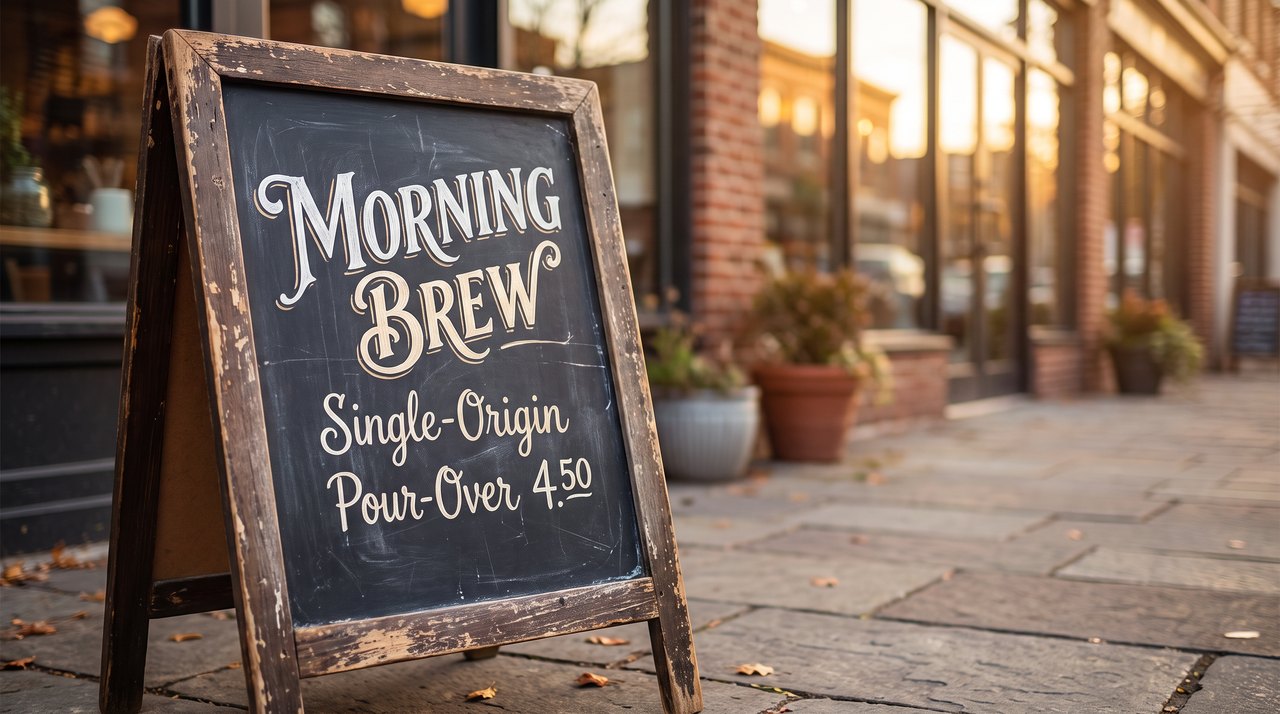
A weathered wooden A-frame chalkboard cafe sign reading MORNING BREW / Single-Origin Pour-Over 4.50, soft morning light, photorealistic
2. Seedream 5.0 Pro — photoreal products and posters
Seedream 5.0 Pro (ByteDance) is the one to reach for when the output needs to look like a real photograph — product shots, food and beverage, lifestyle scenes with believable light and material detail.
- Price: $0.05 per image at 1K, $0.10 at 2K.
- Resolution / aspect: 1K and 2K, full set of portrait/landscape ratios.
- When to pick it: e-commerce and editorial photography where surface texture, lighting and color grading carry the image.
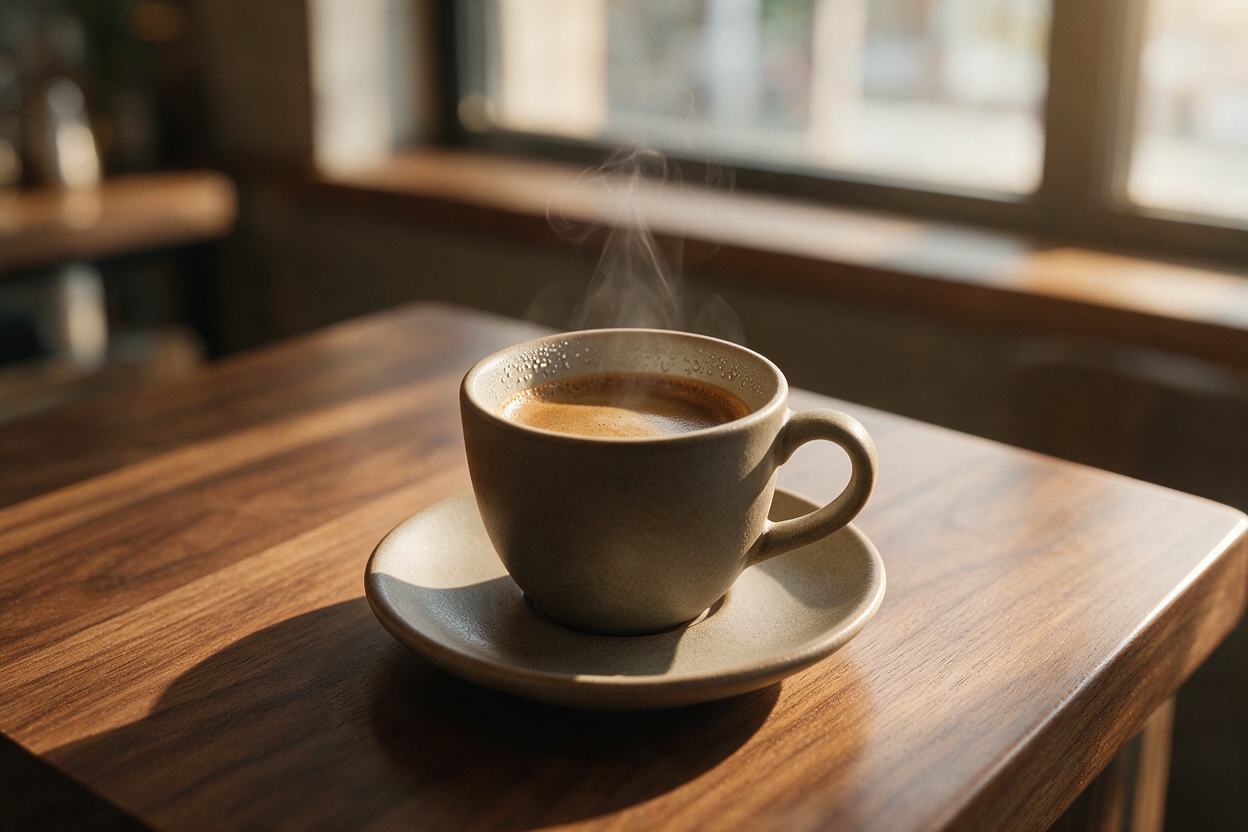
Photorealistic studio product photograph: a matte stoneware espresso cup and saucer on a polished walnut countertop, delicate wisps of steam rising, a softly blurred warm cafe interior with morning sunlight through a window behind, rich natural color grading, fine surface texture, subtle condensation and crema detail, editorial food-and-beverage photography, 35mm cinematic look, shallow depth of field.
3. FLUX.2 — prompt control and flexible resolution
FLUX.2 (Black Forest Labs) is the pick when the prompt is long and specific and you need the model to respect every element of a composition. It also prices by megapixel rather than a fixed tier, so you only pay for the resolution you actually need.
- Price: $0.0375 at 0.5 MP, $0.05 at 1 MP, $0.075 at 2 MP, $0.125 at 4 MP.
- Resolution / aspect: 0.5–4 MP, flexible aspect ratios.
- When to pick it: detailed multi-object scenes, flat-lays and layouts where prompt adherence beats raw photorealism.

Top-down flat-lay: open leather journal with brass fountain pen, steaming black coffee, dried lavender, tortoiseshell glasses, golden-hour walnut desk
4. Qwen Image 3.0 — multilingual text and posters
DALL·E 3's text rendering was mostly an English-language strength. Qwen Image 3.0 (Alibaba) is the standout when you need accurate text in Chinese and other non-Latin scripts — campaign posters, bilingual signage, localized ad creative — and it does it at one of the lowest flat rates here.
- Price: from $0.0358 per image (flat across sizes on the standard tier).
- Resolution / aspect: multiple sizes at a flat rate; a separate Pro tier exists if you need more.
- When to pick it: multilingual or CJK typography, and cost-sensitive poster and ad work.
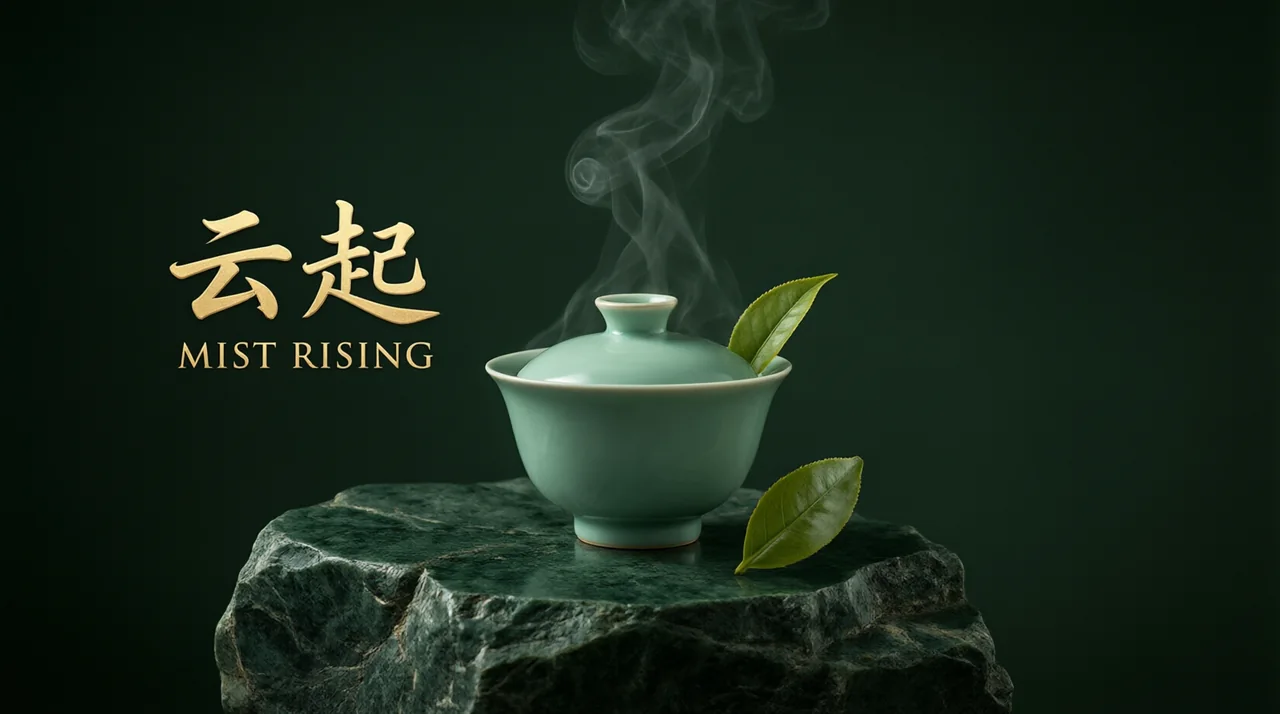
Luxury Chinese tea campaign poster with the exact headline 云起 and subtitle MIST RISING
5. Seedream 5.0 Flash — the cheapest high-volume option
When you are generating thousands of images — product variants, thumbnails, A/B creative — unit cost is the whole story. Seedream 5.0 Flash is the budget member of the Seedream family: the same photoreal lineage as the Pro model, tuned for speed and the lowest price in this lineup.
- Price: a flat $0.025 per image.
- Resolution / aspect: standard size and ratio options at one flat price.
- When to pick it: high-throughput batch jobs where $0.025 vs $0.04 compounds across your monthly volume.
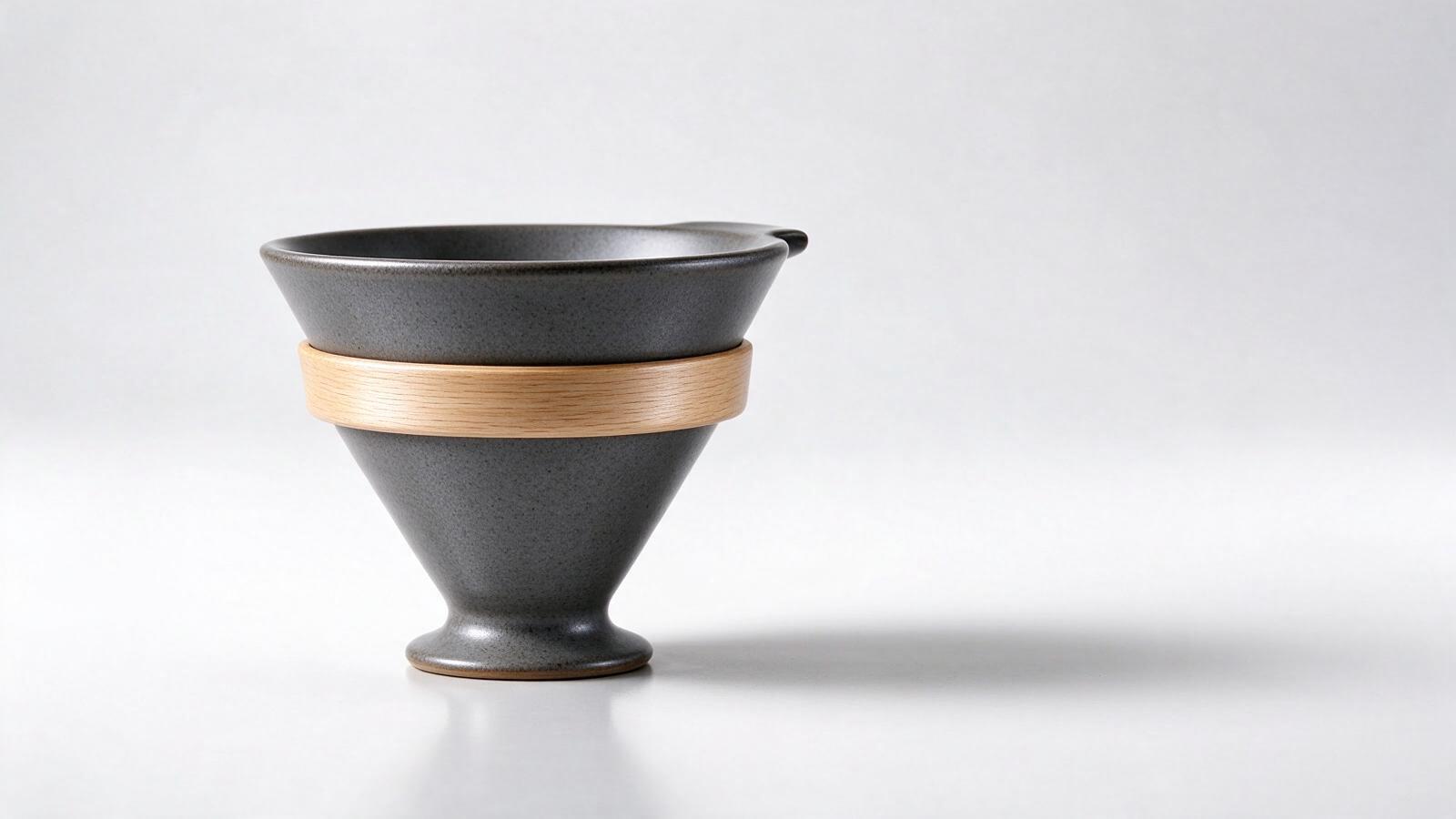
Professional e-commerce product photography of a matte charcoal-grey ceramic pour-over coffee dripper with a light wooden collar, placed on a seamless soft white studio backdrop, three-point softbox lighting with gentle reflections, slight 3/4 angle, sharp focus on surface texture, no text, no logos, no watermark, wide 16:9 composition with generous negative space on the right side.
Quick comparison
Prices are per image, verified against HiAPI's live pricing at publication time. The DALL·E 3 row uses OpenAI's published API list price and is included only as the baseline you are replacing.
| Model | Best for | Base price (1K / standard) | Higher-res | Max resolution |
|---|---|---|---|---|
| Nano Banana Pro | All-round quality + in-image text | $0.057 (1K & 2K, flat) | $0.10 at 4K | 4K |
| Seedream 5.0 Pro | Photoreal products & posters | $0.05 (1K) | $0.10 (2K) | 2K |
| FLUX.2 | Prompt control, pay per megapixel | $0.05 (1 MP) | $0.075–$0.125 (2–4 MP) | 4 MP |
| Qwen Image 3.0 | Multilingual text & posters | from $0.0358 (flat) | — | multi-size |
| Seedream 5.0 Flash | High-volume, low-cost batches | $0.025 (flat) | — | standard |
| DALL·E 3 (baseline, being retired) | The model you're moving off | $0.04 std / $0.08 HD | $0.12 large HD | 1792 px |
Two patterns are worth calling out. First, there is no HD surcharge on any of the alternatives — the DALL·E habit of doubling the price for "HD" or large sizes simply does not exist here. Second, every alternative reaches 2K or beyond, so "higher-limit" is literal: you get resolutions DALL·E 3 could not produce, usually for less money.
How to choose
- "I just want DALL·E 3, but it still works." → Nano Banana Pro. It is the closest in behavior (prompt adherence + text), cheaper per image, and goes to 4K.
- "My images need to look like real photos." → Seedream 5.0 Pro.
- "My prompts are long and the model has to get every detail right." → FLUX.2.
- "I need accurate text in Chinese / non-English scripts." → Qwen Image 3.0.
- "I'm generating at volume and unit cost is everything." → Seedream 5.0 Flash.
Because all five live behind one key, this is not a one-way door. A sensible path is to route your highest-value images to Nano Banana Pro and your bulk jobs to Seedream 5.0 Flash, then adjust as you see real results.
Migrating from DALL·E 3
DALL·E 3 used a single synchronous image endpoint. On HiAPI, image models run as asynchronous tasks: you submit a job, then poll (or use a callback) for the result. The shape is the same for every model above — only the model and input fields change. Here is a complete, working request:
# 1) Submit the generation task
curl -s -X POST "https://api.hiapi.ai/v1/tasks" \
  -H "Authorization: Bearer $HIAPI_API_KEY" \
  -H "Content-Type: application/json" \
  -d '{
    "model": "nano-banana-pro",
    "input": {
      "prompt": "A weathered wooden A-frame chalkboard cafe sign reading MORNING BREW, soft morning light, photorealistic",
      "aspect_ratio": "16:9",
      "resolution": "2K"
    }
  }'
# -> { "data": { "taskId": "tk-..." } }

# 2) Poll the task until it reports success, then read output[0].url
curl -s "https://api.hiapi.ai/v1/tasks/tk-..." \
  -H "Authorization: Bearer $HIAPI_API_KEY"
# -> { "data": { "status": "success", "output": [ { "url": "https://..." } ] } }
import requests, time

HEADERS = {"Authorization": f"Bearer {API_KEY}"}

def generate(model, prompt, aspect_ratio="1:1", resolution="2K"):
    r = requests.post(
        "https://api.hiapi.ai/v1/tasks",
        headers=HEADERS,
        json={"model": model, "input": {
            "prompt": prompt, "aspect_ratio": aspect_ratio, "resolution": resolution}},
    )
    task_id = r.json()["data"]["taskId"]
    while True:
        task = requests.get(
            f"https://api.hiapi.ai/v1/tasks/{task_id}", headers=HEADERS
        ).json()["data"]
        if task["status"] == "success":
            return task["output"][0]["url"]
        if task["status"] == "fail":
            raise RuntimeError(task.get("error"))
        time.sleep(5)

# Swapping models is a one-word change:
url = generate("seedream-5.0-flash", "studio product photo of a ceramic pour-over dripper")
Two migration notes. Output URLs are time-limited (they carry an expireAt), so download the bytes as soon as the task succeeds rather than hot-linking them. And because the endpoint is identical across models, pointing your pipeline at a different model is a single string change — which is exactly what makes A/B testing cheap. The full parameter set for each model lives in the HiAPI docs.
FAQ
Is there a true DALL·E 3 replacement, or just "close enough"? There is no drop-in clone, because DALL·E 3 is OpenAI's own model. But for the jobs people actually used it for — prompt-faithful generation with readable text — Nano Banana Pro is a strong like-for-like, and at higher resolution for less money.
Which alternative is cheapest? Seedream 5.0 Flash at $0.025 per image, below DALL·E 3's $0.04 standard rate. Qwen Image 3.0 is next at $0.0358. If you need the quality step up, Nano Banana Pro's flat $0.057 (1K and 2K) still undercuts DALL·E 3 HD at $0.08.
Do these cost more at higher resolution, like DALL·E 3's HD tier? Not in the DALL·E way. Nano Banana Pro is flat $0.057 for both 1K and 2K. Seedream 5.0 Pro and FLUX.2 charge more only when you genuinely go to a larger size, and you can stay at the base tier if you don't need it.
Can I keep my existing prompts? Mostly yes. These models respond well to the descriptive, natural-language prompts DALL·E 3 trained you to write. The main change is operational: you call an async task endpoint and poll for the result instead of getting the image back in one synchronous call.
Do I need a different integration for each model?
No. All five share the same POST /v1/tasks request shape on one HiAPI key. Switching models means changing the model field, which is why running a head-to-head on your own prompts is inexpensive.
Bottom line
DALL·E 3 was a fine model, but its API is on the way out, it capped at 1792 px, and it charged an HD premium. The five models here cover the same ground — all-round quality, photoreal product work, prompt control, multilingual text, and cheap batch output — starting at $0.025 per image, reaching up to 4K, with no HD surcharge and a single endpoint behind them.
The lowest-risk move is to pick the one that matches your main use case, run your own prompts through it, and keep the rest on the same key for when the job changes. Create a free HiAPI key, send the same prompt to two of these models, and compare the output before you commit.
Related reading
- Best AI Image Generation APIs in 2026 — the broader platform-level roundup.
- Stable Diffusion API Alternatives in 2026 — a sibling comparison for teams leaving SD/SDXL.
- Cheapest Image Generation API — how to compare real cost per image across models.
- GPT Image 2.5 vs Seedream 5.0 Pro — a focused head-to-head on products and posters.