veo-3.1-lite/text-to-video is one of the few text-to-video models on hiapi where audio isn't all-or-nothing — a generate_audio flag lets you turn native sound on or off per request, and it changes the per-second price. That makes it a good model to learn on two different jobs: an ambient scene that leans on layered sound, and a silent vertical product loop meant to autoplay muted. If you want a model that always ships audio and never asks, wan2.7-video/text-to-video is the closer comparison.
This guide gives you two copy-paste prompt recipes for veo-3.1-lite/text-to-video, each the real, first-take output of the prompt printed next to it, generated through the hiapi task API — no cherry-picking across seeds, no re-rolls. Both clips together cost $0.64.
The request shape (read this first)
veo-3.1-lite/text-to-video runs on hiapi's async task endpoint. The fields that matter for the two recipes below:
prompt— the scene: subject, action, background, camera, and (if audio is on) sound.duration— in seconds; the model offers 4, 6, or 8-second clips.resolution—720por1080p.aspect_ratio— landscape or vertical framing; we used16:9and9:16below.generate_audio— a boolean. Set ittruefor a scene that needs a soundtrack,falsefor a silent loop — and it's cheaper per second when it's off.
curl -X POST https://api.hiapi.ai/v1/tasks \
  -H "Authorization: Bearer $HIAPI_API_KEY" \
  -H "Content-Type: application/json" \
  -d '{
    "model": "veo-3.1-lite/text-to-video",
    "input": {
      "prompt": "A small pour-over coffee stand at a sunlit morning farmers market...",
      "duration": 4,
      "resolution": "720p",
      "aspect_ratio": "16:9",
      "generate_audio": true
    }
  }'
The response returns a taskId immediately; poll GET /v1/tasks/{taskId} until status is success and download output[0].url right away — it's a temporary link.
Recipe 1: The ambient scene, audio on
The job here is a real, layered soundscape under a real camera move — the kind of clip a coffee brand's social account would actually post with the sound up:
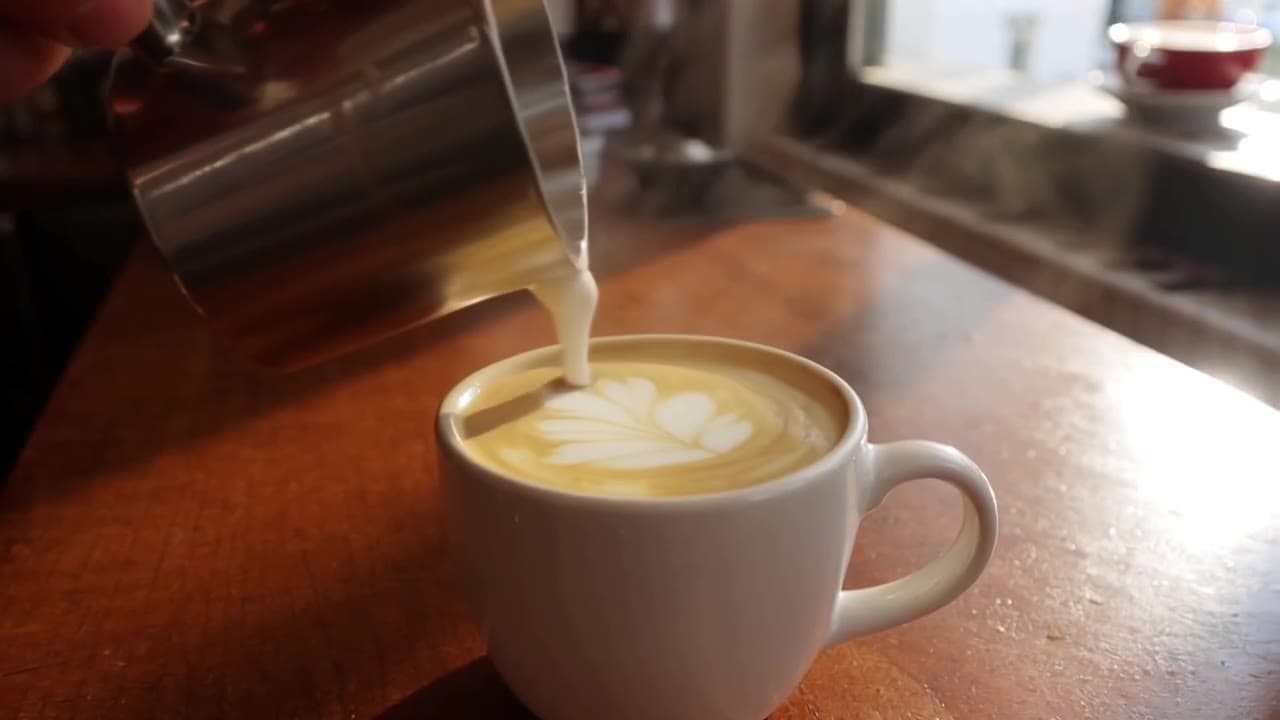
A small pour-over coffee stand at a sunlit morning farmers market. A barista
in a denim apron pours hot water in a slow spiral over ground coffee in a
paper filter; steam curls upward and catches the light as the coffee blooms
with a soft hiss. In the blurred background, market-goers browse stalls
under a canvas awning that stirs in the breeze. Camera slowly pushes in on
the pour. Warm golden-hour light, shallow depth of field, handheld
documentary feel. Soft hiss and crackle of the pour layered under distant
market chatter and a light wind.
Parameters: duration: 4, resolution: 720p, aspect_ratio: 16:9, generate_audio: true — cost $0.40.
First-take output:
The pour is the whole shot, and the model kept it that way: the water spiral, the rising steam, and the slow push-in all run for the full four seconds without drifting into a cutaway. The background does exactly what "blurred" and "market-goers" asked for — shapes moving past a canvas awning, never sharp enough to compete with the pour. Turn the sound on and the audio clause shows up as three distinct layers: the hiss/crackle of the pour up close, a soft wall of chatter underneath, and wind threading through both. That's the pattern worth copying — name each audio layer separately (foreground sound, ambient crowd, environment) rather than writing one vague "market sounds" cue.
Recipe 2: The silent product loop, audio off
The second job is the opposite instinct: a locked-off commerce shot with generate_audio: false, because a product loop meant for a muted autoplay feed doesn't need a soundtrack — and skipping it drops the per-second price:
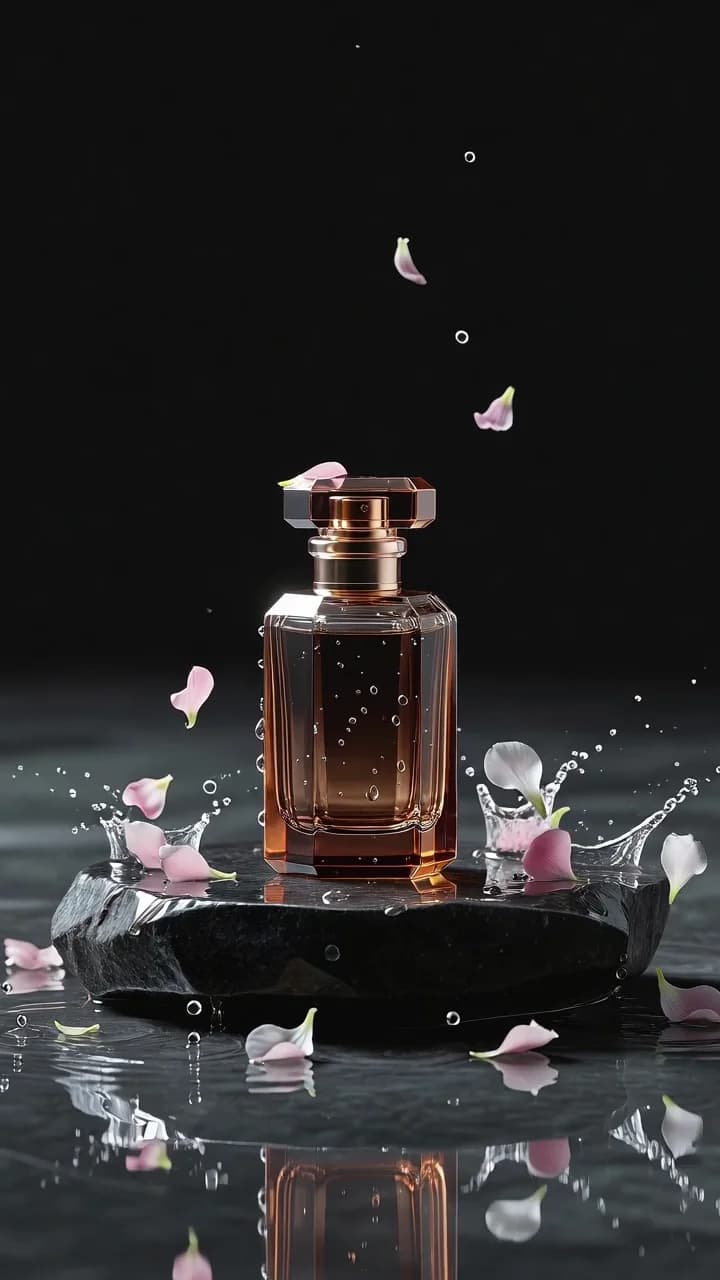
Vertical product shot: a matte-black wireless earbud case slowly rotates on
a reflective black surface under a single overhead spotlight, throwing a
clean circular highlight across its lid. A thin ring light glows behind it,
rim-lighting the edges in cool blue. The camera stays locked off, centered,
with no movement except the case's slow rotation. Minimal studio background
fading to pure black at the edges. Sleek, premium tech-commercial look,
crisp reflections, no dust or fingerprints.
Parameters: duration: 4, resolution: 720p, aspect_ratio: 9:16, generate_audio: false — cost $0.24.
First-take output:
Every constraint in the prompt reads through: the frame never pans or drifts, the only motion is the case's rotation, and the spotlight's circular highlight travels across the lid exactly as the surface turns. That's what "the camera stays locked off, centered, with no movement except X" buys you — naming what should stay still is as load-bearing as naming what should move. And because this loop doesn't need a voice or music bed to be useful (most commerce placements add their own), turning generate_audio off wasn't a compromise — it's 40% cheaper per second at 720p and the clip loses nothing.
The cheat sheet
- Treat
generate_audioas a creative decision, not a default. Ambient scenes and narrative beats want it on; locked product loops for muted feeds don't — and turning it off costs 40% less per second at 720p ($0.06 vs $0.10). - Name each audio layer separately when audio is on — foreground sound, ambient crowd or room tone, environment — instead of one vague "background noise" cue.
- State what should NOT move on locked-camera shots ("the camera stays locked off, centered, with no movement except the case's slow rotation"). It's as load-bearing as describing what should.
- Match
aspect_ratioto the platform:16:9for an ambient or landscape scene,9:16for a vertical product or commerce loop. - Prototype at 4 seconds before spending on the longer 6- or 8-second duration options.
What it costs
veo-3.1-lite/text-to-video is priced per second of output, and the rate depends on both resolution and whether audio is on:
| Setting | Price per second |
|---|---|
| 720p, with audio (default) | $0.10 |
| 720p, no audio | $0.06 |
| 1080p, with audio | $0.14 |
| 1080p, no audio | $0.10 |
Clips can run 4, 6, or 8 seconds. The two clips in this post — one 4-second 720p clip with audio, one 4-second 720p clip without — cost $0.64 total. Current rates are always on the pricing page.
Try it
Both recipes above ran on the default 720p tier; swap in your own subject, decide up front whether the shot needs a soundtrack, and post it to the task API. The veo-3.1-lite/text-to-video model page has the live parameter reference and current pricing. If your shot is closer to a narrative scene that should always carry sound, the wan2.7 text-to-video prompt recipes are a useful side-by-side: same task API shape, audio baked in rather than optional.