If you've been asking "which AI image generator actually looks real," the honest answer is that it depends on what you're generating — but for photorealistic human portraits specifically, we ran a controlled test to find out. We took one identical prompt — same lighting, same lens, same skin-detail instructions — and ran it through four of hiapi's current top image models: Seedream 5.0 Pro, Nano Banana 2, Qwen Image 3.0 Pro, and FLUX.2. No per-model prompt tweaking, no cherry-picked seeds beyond the first generation. Here's what we found, image by image, plus the live per-image cost for each.
The test setup
Every model received the exact same prompt:
Photorealistic close-up portrait of a middle-aged woman with freckles and windblown auburn hair, standing outdoors during golden hour, natural warm directional sunlight, visible skin pores and fine wrinkles, a sharp catchlight in each eye, shot on an 85mm portrait lens at f/1.8 with shallow depth of field, candid unfiltered expression, realistic skin tone gradients, no makeup filter, no airbrushing
All four requests went through HiAPI's /v1/tasks async endpoint (create → poll → download), and every image below is the direct, unedited output. Pricing is pulled live from hiapi's pricing page at the time of testing — image model prices can and do change, so always check the live number before budgeting a production run.
Seedream 5.0 Pro: the most photorealistic of the four
Prompt used (identical to all others):
Photorealistic close-up portrait of a middle-aged woman with freckles and windblown auburn hair, standing outdoors during golden hour, natural warm directional sunlight, visible skin pores and fine wrinkles, a sharp catchlight in each eye, shot on an 85mm portrait lens at f/1.8 with shallow depth of field, candid unfiltered expression, realistic skin tone gradients, no makeup filter, no airbrushing
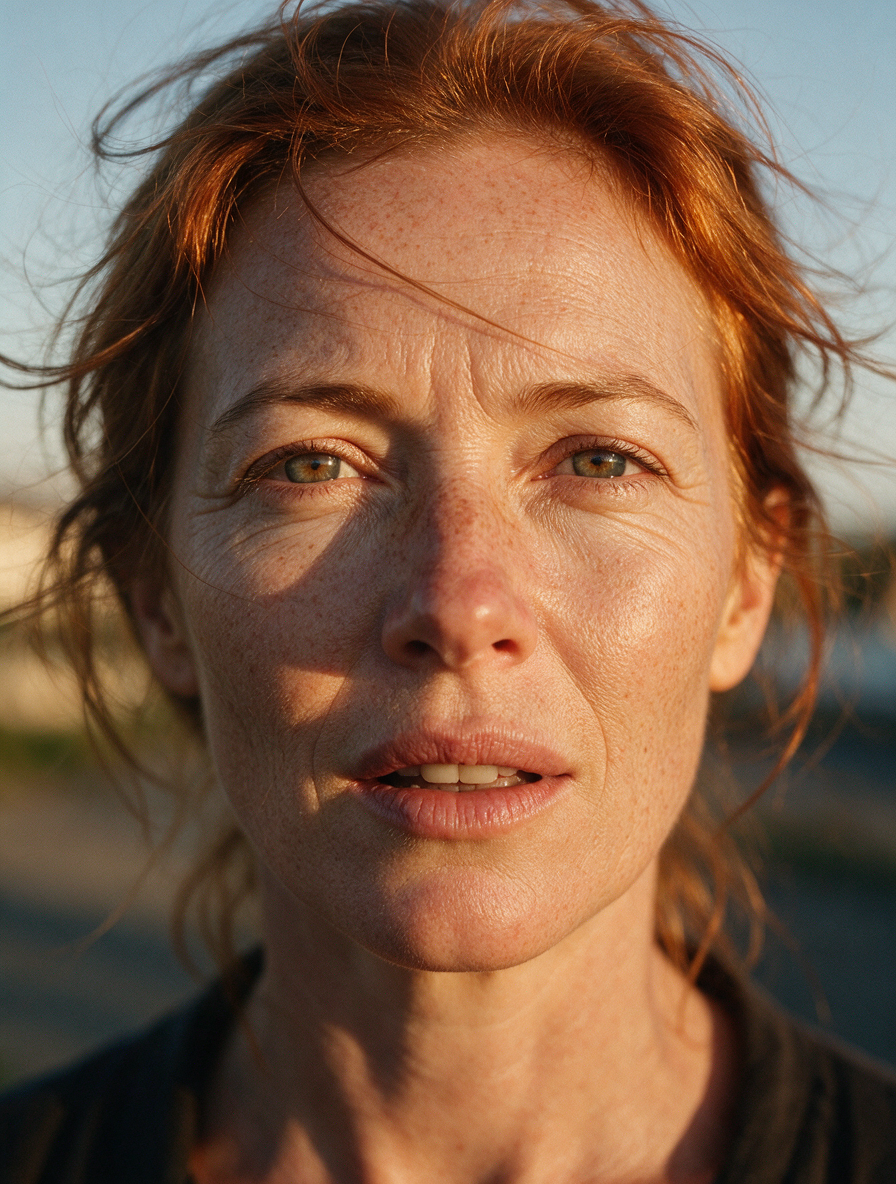
Seedream 5.0 Pro produced the grittiest, most texture-dense skin in this test — visible pores, uneven skin tone gradients, and fine wrinkles that read as genuinely photographed rather than smoothed. Windblown hair strands are rendered individually rather than as a mass, and the catchlights in both eyes are sharp and consistent with the stated golden-hour direction. Of the four, this is the one we'd point to first if "does it look like a real photo" is the only criterion that matters.
At 1K resolution, Seedream 5.0 Pro costs $0.05 per image via the Seedream 5.0 Pro API; 2K output is $0.10.
Nano Banana 2: a very close second, and a pricing surprise
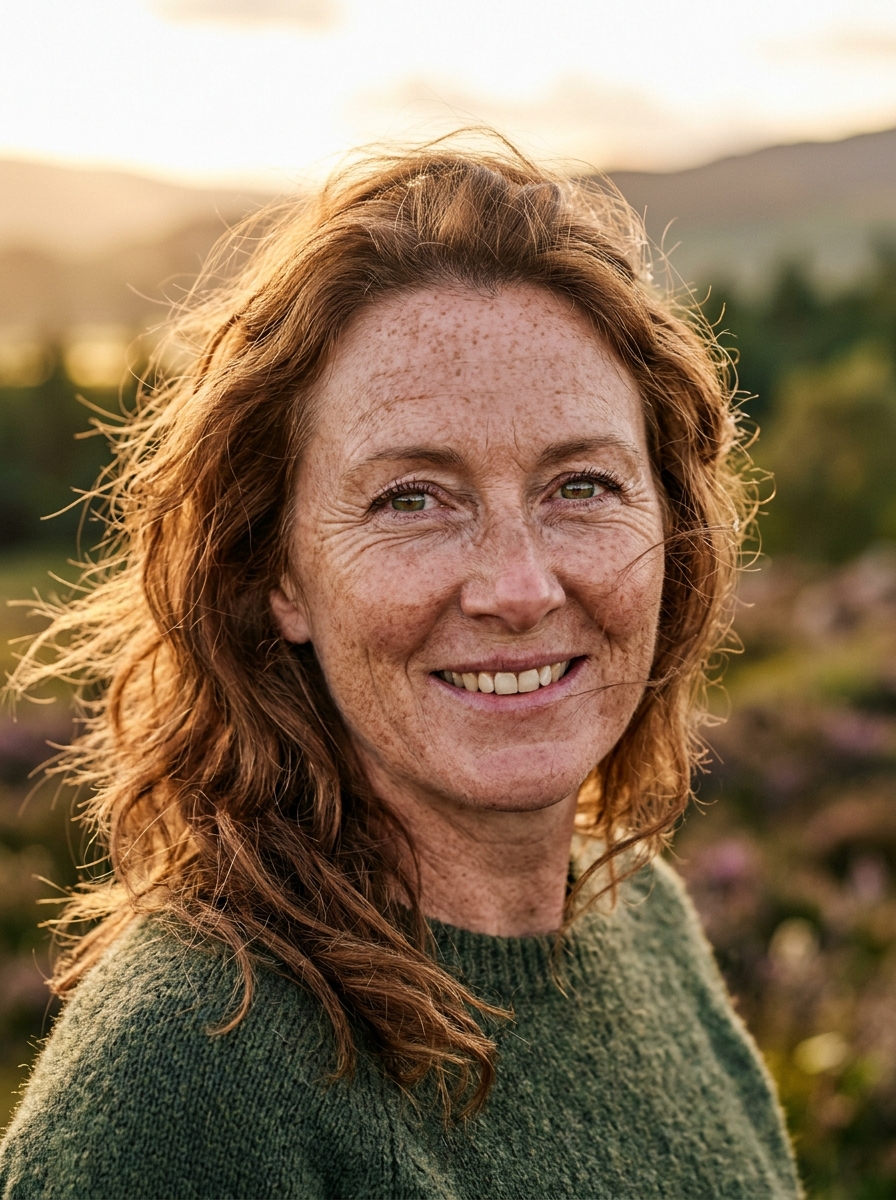
Prompt used (identical to all others):
Photorealistic close-up portrait of a middle-aged woman with freckles and windblown auburn hair, standing outdoors during golden hour, natural warm directional sunlight, visible skin pores and fine wrinkles, a sharp catchlight in each eye, shot on an 85mm portrait lens at f/1.8 with shallow depth of field, candid unfiltered expression, realistic skin tone gradients, no makeup filter, no airbrushing
Nano Banana 2 is close behind Seedream 5.0 Pro on realism — the skin is slightly smoother and marginally less gritty, but freckles, fine wrinkles, and directional light all render convincingly. If Seedream 5.0 Pro is the "unretouched raw photo" look, Nano Banana 2 sits just one notch toward "lightly processed."
The pricing is worth calling out specifically: Nano Banana 2 charges $0.085 at 1K, but $0.076 at 2K — the higher resolution is actually cheaper. At 4K it's $0.114. We verified this directly against the live pricing API rather than assuming resolution scales price linearly, and it doesn't for this model — if you're optimizing cost, generating at 2K instead of 1K on Nano Banana 2 gets you more resolution for less money.
Qwen Image 3.0 Pro: the value pick

Prompt used (identical to all others):
Photorealistic close-up portrait of a middle-aged woman with freckles and windblown auburn hair, standing outdoors during golden hour, natural warm directional sunlight, visible skin pores and fine wrinkles, a sharp catchlight in each eye, shot on an 85mm portrait lens at f/1.8 with shallow depth of field, candid unfiltered expression, realistic skin tone gradients, no makeup filter, no airbrushing
Qwen Image 3.0 Pro delivers pore-level skin detail and believable directional lighting that's genuinely competitive with the two models above it, at roughly half the price. It's not quite as gritty as Seedream 5.0 Pro on close inspection, but at normal viewing sizes (blog hero images, social posts, thumbnails) the difference is hard to spot.
Qwen Image 3.0 Pro costs $0.0497 per image at 1K and $0.0993 at 2K — the cheapest of the four models in this test at every resolution tier we checked.
FLUX.2: solid realism, different pricing unit
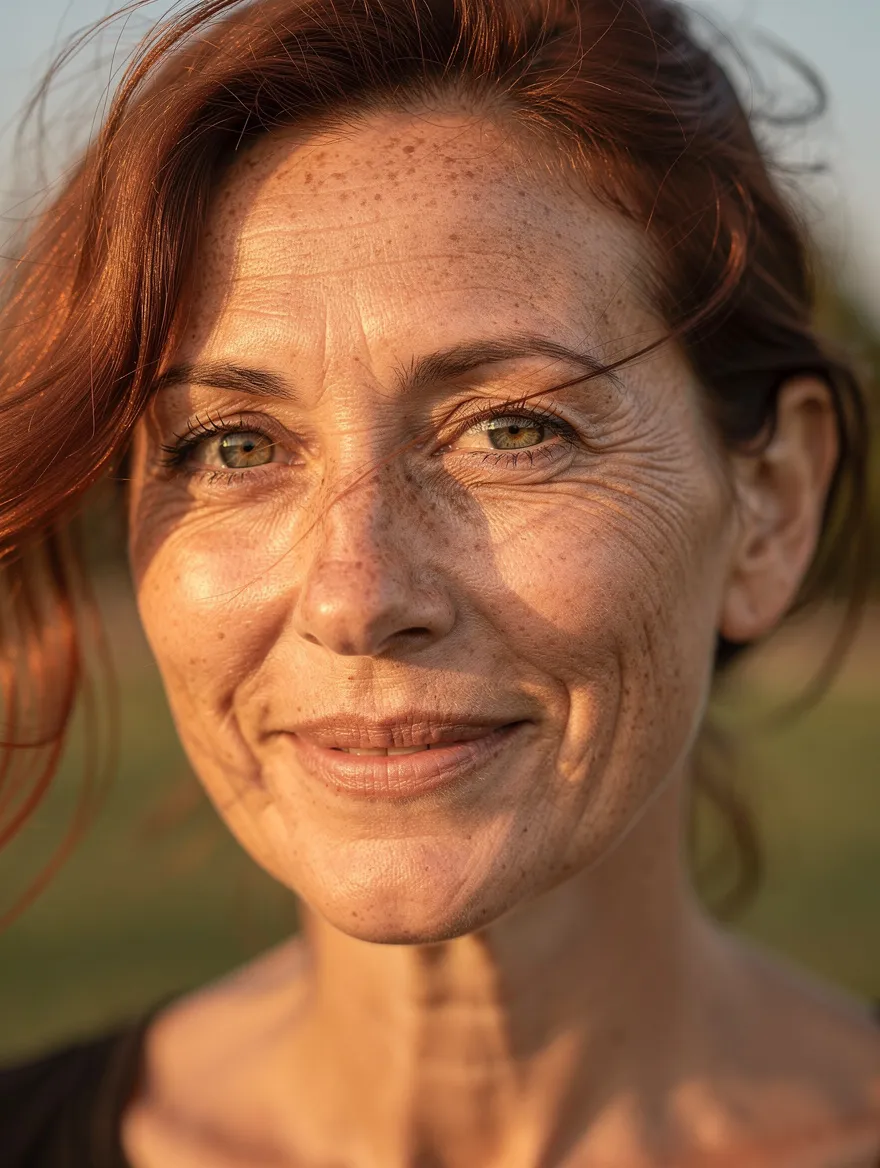
Prompt used (identical to all others):
Photorealistic close-up portrait of a middle-aged woman with freckles and windblown auburn hair, standing outdoors during golden hour, natural warm directional sunlight, visible skin pores and fine wrinkles, a sharp catchlight in each eye, shot on an 85mm portrait lens at f/1.8 with shallow depth of field, candid unfiltered expression, realistic skin tone gradients, no makeup filter, no airbrushing
FLUX.2 produced a warm, genuine expression with visible forehead and under-eye lines, clear freckles, and natural wind-blown hair strands crossing the face — realism-wise it sits between Nano Banana 2 and Qwen Image 3.0 Pro, with slightly less pore-level grit than Seedream 5.0 Pro but still clearly photorealistic rather than illustrated.
The one thing to flag: FLUX.2 doesn't price by resolution tier (1K/2K/4K) like the other three models here — it prices by megapixel. At 1MP it's $0.05, scaling to $0.0375 at 0.5MP, $0.075 at 2MP, and $0.125 at 4MP. Don't try to line this up directly against a "1K" price from another model — they're measuring different things, and conflating them will give you a wrong cost comparison.
Pricing side-by-side
| Model | Price (lowest tier) | Unit | Price (next tier) |
|---|---|---|---|
| Qwen Image 3.0 Pro | $0.0497 | 1K | $0.0993 (2K) |
| Seedream 5.0 Pro | $0.05 | 1K | $0.10 (2K) |
| FLUX.2 | $0.05 | 1MP | $0.075 (2MP) |
| Nano Banana 2 | $0.085 | 1K | $0.076 (2K, cheaper) |
Pricing verified live against hiapi's pricing page at time of publication. Always check current rates before budgeting a production run — model pricing changes over time.
Which model should you actually use?
- Chasing maximum realism, budget is secondary: Seedream 5.0 Pro or Nano Banana 2.
- Best realism-per-dollar: Qwen Image 3.0 Pro — it's the cheapest of the four and still delivers pore-level detail.
- Already building on FLUX for other reasons: FLUX.2 holds its own on realism, just budget by megapixel rather than resolution tier.
- Not sure yet: run the same fixed prompt across two or three candidates on your own subject matter before committing — realism preferences and failure modes shift depending on what you're generating (portraits vs. products vs. environments).
If you're comparing image models more broadly rather than just for realism, our guide to choosing an AI image generation API and best AI image generation APIs in 2026 cover speed, editing capability, and licensing alongside output quality.
FAQ
Which AI image generator is the most realistic in 2026? In this head-to-head test, Seedream 5.0 Pro produced the most photorealistic skin texture and detail, with Nano Banana 2 a close second. Both are strong choices if realism is your top priority.
What's the cheapest way to generate photorealistic AI images? Qwen Image 3.0 Pro, at $0.0497 per image at 1K resolution, was the least expensive of the four models tested while still producing pore-level skin detail.
Does higher resolution always cost more for AI image generation? Not always — Nano Banana 2 is a confirmed exception, pricing 2K output ($0.076) lower than 1K output ($0.085). Always check a model's live pricing tiers rather than assuming a linear relationship between resolution and cost.
Why does FLUX.2 pricing look different from the other models? FLUX.2 prices by megapixel (0.5MP/1MP/2MP/4MP) rather than by resolution tier (1K/2K/4K) like Seedream 5.0 Pro, Nano Banana 2, and Qwen Image 3.0 Pro. The units aren't directly comparable, so treat FLUX.2's megapixel pricing separately when budgeting.
Can I reproduce this test myself?
Yes — the exact prompt used for every model in this test is shown above each image. All four models are accessible through the same hiapi API using the /v1/tasks endpoint.