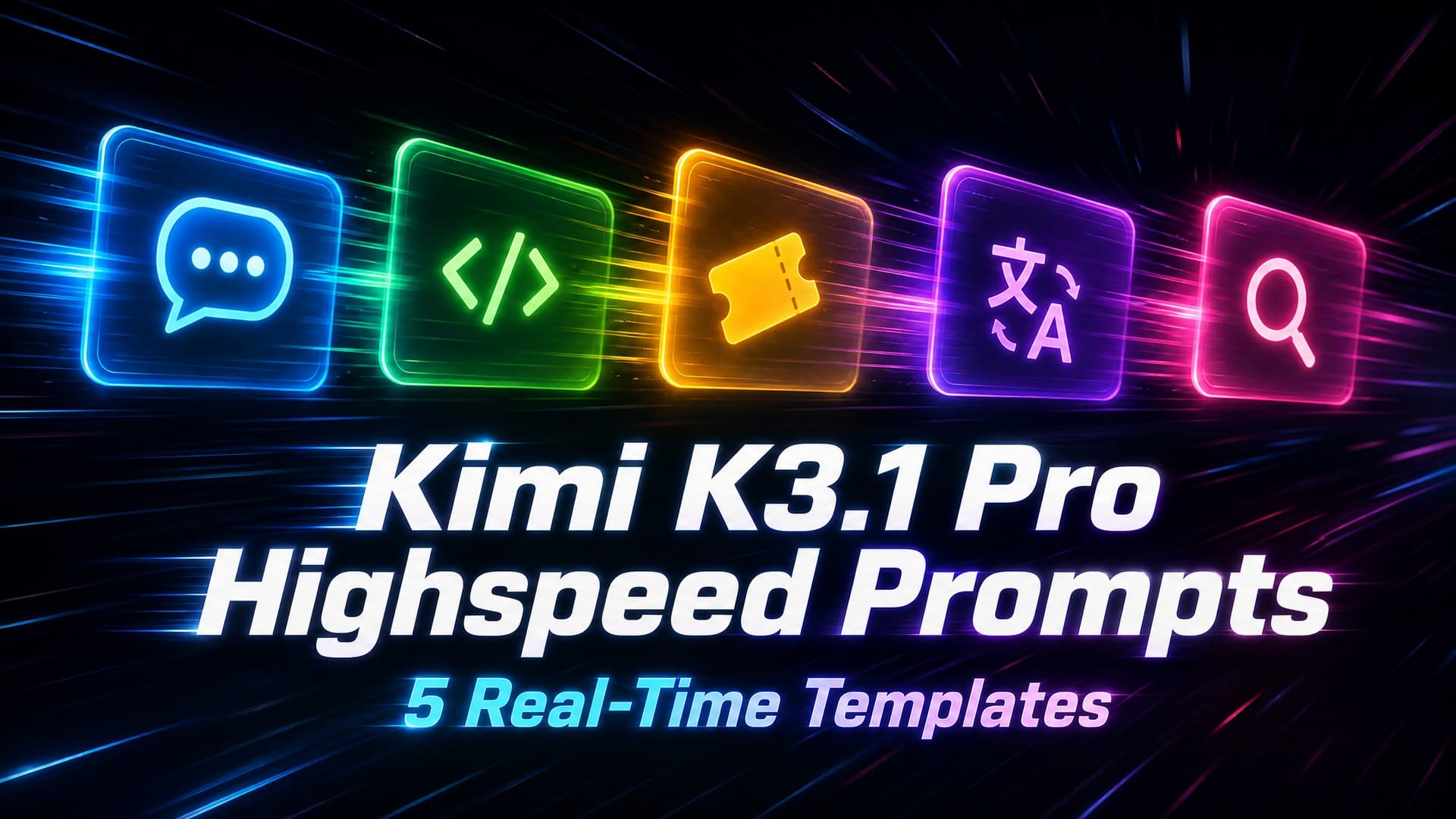
Five batch scenarios GPT-6 Luna was built for: classification, extraction, rewriting, FAQ automation and simple agents. Each includes a complete prompt, recommended parameters, and the expected output. GPT-6 Luna is live on HiAPI. Open the model page to try directly, and new accounts get 200 free credits on sign-up.
1. Batch classification: product review sentiment
The task: thousands of user reviews daily. Classify each as positive/neutral/negative and extract mentioned product features.
Recommended settings: reasoning.effort=none (classification does not need reasoning), text.format with json_schema for guaranteed structured output.
{
  "model": "gpt-6-luna",
  "reasoning": {"effort": "none"},
  "input": [
    {
      "role": "system",
      "content": "You are a product review analyser. For each review, output JSON with sentiment (positive/neutral/negative), a list of mentioned product features, and whether the reviewer recommends the product. Output JSON only, no extra text."
    },
    {
      "role": "user",
      "content": "The colour is great, but the sole came off after two weeks. Would not recommend."
    }
  ],
  "text": {
    "format": {
      "type": "json_schema",
      "name": "review_analysis",
      "schema": {
        "type": "object",
        "properties": {
          "sentiment": {"type": "string", "enum": ["positive", "neutral", "negative"]},
          "features": {"type": "array", "items": {"type": "string"}},
          "recommend": {"type": "boolean"}
        },
        "required": ["sentiment", "features", "recommend"]
      }
    }
  }
}
Expected output:
{
  "sentiment": "negative",
  "features": ["colour", "durability"],
  "recommend": false
}
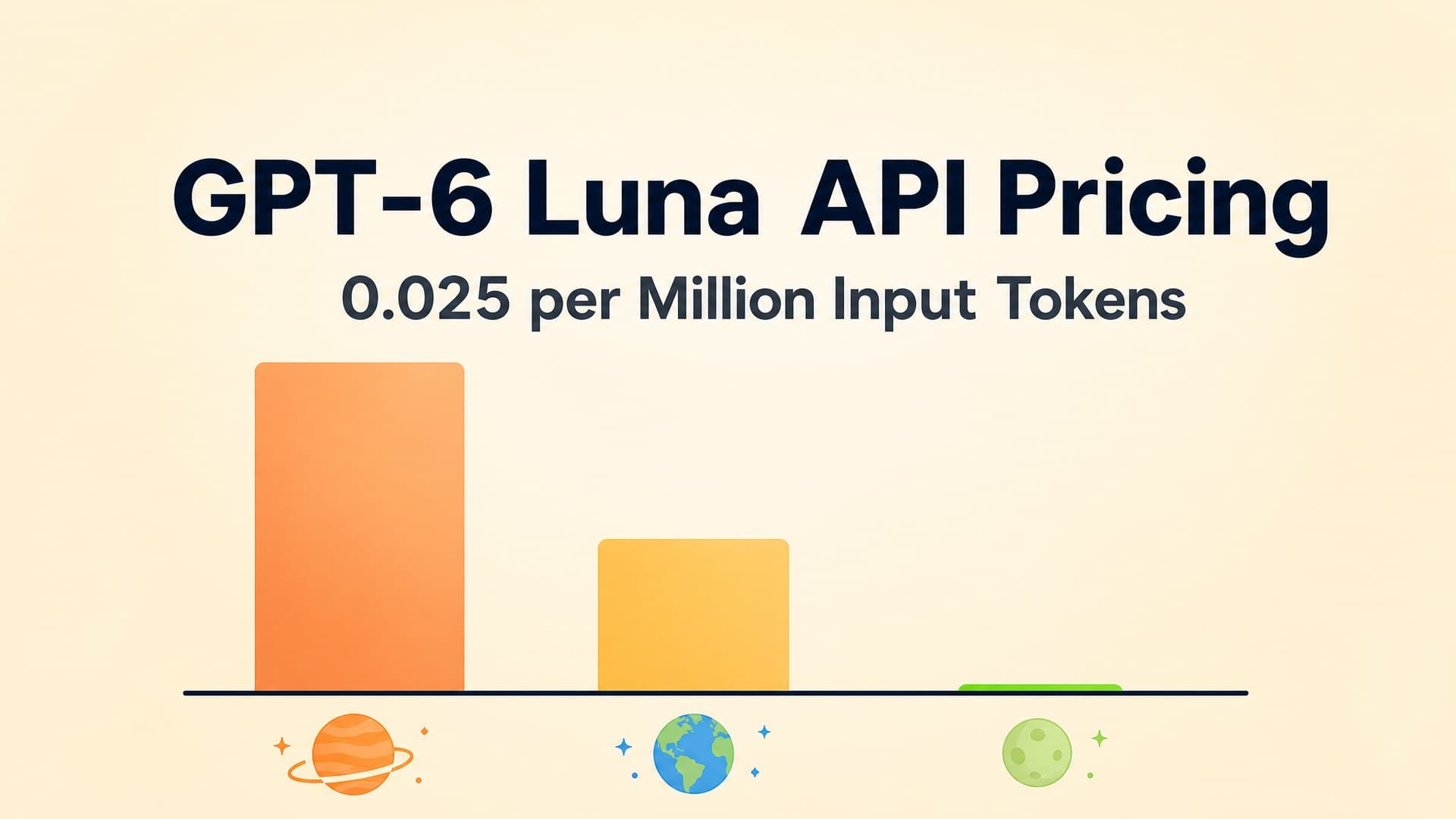
With reasoning.effort=none, the model skips reasoning tokens and returns structured output directly. Each call runs about 200–300 tokens including the system prompt. At $0.025/M input, 10,000 reviews per day costs roughly $0.06. With automatic caching, the repeating system prompt drops further to $0.0025/M.
2. Structured extraction: fields from contract text
The task: pull party names, amounts, dates and key clauses out of scanned contract OCR text.
{
  "model": "gpt-6-luna",
  "reasoning": {"effort": "none"},
  "input": [
    {
      "role": "system",
      "content": "Extract key information from the contract text below. Output JSON. Convert monetary amounts to numbers. Use YYYY-MM-DD for dates. If a field is absent, set it to null. Output JSON only."
    },
    {
      "role": "user",
      "content": "Party A: Acme Corp\nParty B: Globex Inc\nContract value: One hundred fifty thousand US dollars ($150,000)\nSigning date: October 15, 2026\nTerm: 24 months from signing\nPayment: 30% upfront, 70% on delivery"
    }
  ],
  "text": {
    "format": {
      "type": "json_schema",
      "name": "contract_extraction",
      "schema": {
        "type": "object",
        "properties": {
          "party_a": {"type": "string"},
          "party_b": {"type": "string"},
          "amount": {"type": "number"},
          "sign_date": {"type": "string"},
          "duration_months": {"type": "number"},
          "payment_terms": {"type": "string"}
        },
        "required": ["party_a", "party_b", "amount", "sign_date"]
      }
    }
  }
}
Expected output:
{
  "party_a": "Acme Corp",
  "party_b": "Globex Inc",
  "amount": 150000,
  "sign_date": "2026-10-15",
  "duration_months": 24,
  "payment_terms": "30% upfront, 70% on delivery"
}
Only the core fields are marked required. Auxiliary fields like payment_terms are optional: if absent from the source text, the model leaves them out without errors.
3. Batch rewriting: tone and style unification
The task: standardise product descriptions from multiple suppliers into a consistent brand voice, removing duplication along the way.
{
  "model": "gpt-6-luna",
  "reasoning": {"effort": "none"},
  "input": [
    {
      "role": "system",
      "content": "You are an e-commerce editor. Rewrite each product description in a unified brand voice: concise, professional, highlighting the use case. Preserve all factual information (dimensions, materials, features). Do not add information not present in the source text."
    },
    {
      "role": "user",
      "content": "This coffee mug is seriously awesome! 304 stainless steel inside, keeps drinks hot for 6 hours, 380ml capacity. The lid has a silicone seal so it never leaks in your bag. Perfect for the office or outdoors."
    }
  ]
}
Expected output:
380ml stainless steel travel mug. 304-grade interior, 6-hour heat retention. Silicone-sealed leakproof lid. For office and outdoor use.
With reasoning.effort=none, each item runs about 150 tokens in and 80 out. At $0.025/$0.125, 1,000 rewrites cost roughly $0.014. When the system prompt repeats across requests, caching drops the input cost further.
4. Automated FAQ: knowledge-base Q&A
The task: load a product manual or FAQ document as the system prompt and answer common user questions automatically, citing the source material.
{
  "model": "gpt-6-luna",
  "reasoning": {"effort": "none"},
  "input": [
    {
      "role": "system",
      "content": "You are a customer support assistant for HiAPI. Here is the product information you work from:\n\nHiAPI is an AI API aggregation platform covering text, image, video and audio models.\n\nPricing: per-token or per-image, see the /pricing page for live rates.\nNew accounts receive 200 free credits on sign-up.\nAPI keys are created in the dashboard.\nRefund policy: failed generations are refunded automatically in full.\n\nReply in English. Answer only the question asked. If you do not know, say so. Do not make up information."
    },
    {
      "role": "user",
      "content": "Do I get charged for failed generations?"
    }
  ]
}
Expected output:
No. The amount held for a failed generation is refunded in full, automatically.
The trick: put your entire knowledge base into the system prompt. Automatic caching means repeated system prompts hit at $0.0025/M. Each Q&A runs about 500 tokens in and 80 out, roughly $0.000023 at standard rates.
5. Simple agent: multi-step lookup and summarise
The task: a user asks a question. The model calls tools to fetch prices and search documentation, then summarises the answer. No deep reasoning needed, but the tool calls must be accurate.
{
  "model": "gpt-6-luna",
  "tools": [
    {
      "type": "function",
      "function": {
        "name": "get_model_price",
        "description": "Look up the HiAPI price for a model",
        "parameters": {
          "type": "object",
          "properties": {
            "model_name": {"type": "string", "description": "Model name, e.g. gpt-6-luna"}
          },
          "required": ["model_name"]
        }
      }
    },
    {
      "type": "function",
      "function": {
        "name": "search_knowledge_base",
        "description": "Search the HiAPI help documentation",
        "parameters": {
          "type": "object",
          "properties": {
            "query": {"type": "string", "description": "Search query"}
          },
          "required": ["query"]
        }
      }
    }
  ],
  "tool_choice": "auto",
  "input": [
    {
      "role": "system",
      "content": "You are a HiAPI assistant. When asked about pricing, call get_model_price. When asked about usage, call search_knowledge_base. Summarise the tool results into a one-sentence answer."
    },
    {
      "role": "user",
      "content": "Which is cheaper, gpt-6-luna or gpt-5.6-luna?"
    }
  ]
}
This is the entry point of an agent loop. The model will call get_model_price("gpt-6-luna") then get_model_price("gpt-5.6-luna"), then summarise. Your code implements the tools, appends the results to the conversation, and sends it back to the model until the model stops calling tools.
Luna is built for simple agents like this: clear tool definitions, short reasoning chains. For multi-step reasoning exceeding three tool-call rounds, or flows that need intermediate validation and self-correction, use Terra or Sol.
Three rules for getting the most out of Luna
- Turn reasoning off when you do not need it. Classification, extraction, rewriting and simple Q&A do not benefit from reasoning tokens. Set
reasoning.effort=none, save the tokens and gain control overtemperatureandtop_p. - Force structured output with json_schema. Set
text.formattojson_schema, define yournameandschema, and the output goes directly into your database with no post-processing. - Load long prompts into the system message and let caching do the work. Product manuals, FAQ documents and few-shot examples belong in the system prompt. Repeated cache hits cost $0.0025/M.
| Scenario | reasoning.effort | text.format | ~$ per 1,000 calls |
|---|---|---|---|
| Batch classification | none | json_schema | $0.006 |
| Structured extraction | none | json_schema | $0.01 |
| Content rewriting | none | none | $0.014 |
| FAQ answering | none | none | $0.023 |
| Simple agent | low/medium | none | $0.05–$0.15 |
These are estimates based on typical token counts at standard-tier rates ($0.025/M input, $0.125/M output), before cached-read savings. Your actual costs depend on prompt length and output volume.
FAQ
Does reasoning.effort=none hurt quality?
Not for classification, extraction, rewriting or simple Q&A. Tasks that require logical deduction, causal analysis or multi-step reasoning should use low or medium.
What is the difference between json_schema and just writing "output JSON" in the prompt? json_schema is enforced at the model level. You will never get stray markdown fences or explanatory text. A plain "output JSON" instruction can occasionally produce malformed output.
How do I use Batch for further savings?
Add "processing_mode": "batch" to your request. Input and output are each halved. Best for workloads that do not need real-time responses.
How many agent rounds can Luna handle? One to three tool-call rounds is the sweet spot. More rounds, or flows requiring intermediate validation, should use Terra or Sol.
More on GPT-6 Luna
- GPT-6 Luna model page: chat online, 200 free credits on sign-up
- GPT-6 Luna API pricing: $0.025/M input, the cheapest GPT on HiAPI
- How to use the GPT-6 Luna API: Responses API and Chat Completions
- GPT-6 Luna vs GPT-5.6 Luna: half the price, should you switch
Copy the classification prompt above, open the model page, paste it in and run your first batch. The 200 sign-up credits cover thousands of classifications.