What Notion shipped in October 2026
In mid-October 2026, Notion overhauled its AI agent stack (first reported by cellcog.ai on October 19, 2026, alongside Notion's own announcement). Three changes stand out:
- Agent runtimes jumped from 5 minutes to 24+ hours. Agents can now work through long, multi-step tasks instead of timing out on anything ambitious.
- Auto mode adds intelligent model routing. When Auto mode is on, Notion decides which model handles each task, aiming for the most cost-effective choice instead of always spending on a premium model.
- A new credit system. Business and Enterprise plans get 1,500 Standard credits per month (Notion picks the model) plus 500 Select credits (you pick the model, or run Custom Agents). Custom Agents bill at $10 per 1,000 Notion credits and do not roll over.
Notion's headline claim: Auto mode costs about 90% less on average than Opus 5.5 and Astra across 20+ use cases. That is Notion's own figure, but the direction matches what every team that has benchmarked model tiers has found: most tasks do not need the most expensive model.
Notion Agent and Ask Notion remain included in the Business plan at $20 per user per month, so this is not a separate product line. It is the default AI surface for existing customers.
Why model routing matters
Model routing takes the model selection decision off the user's plate. Instead of one premium model handling everything, each task is matched to the cheapest model that can do it well.
The economics are straightforward. Premium models justify their price on hard reasoning, long context, and complex tool use. Summarizing a meeting, classifying support tickets, or drafting a routine reply needs none of that. A fast budget model handles these tasks at a small fraction of the cost, with no visible quality drop for the reader.
Notion is betting that routing is good enough to be the default. When a mass-market productivity tool makes "the system picks a cheaper model for routine work" the standard behavior, it stops being an optimization trick and becomes an expectation.
The honest boundary: BYOK is not an integration path
There is a limit worth stating plainly, because a lot of coverage glosses over it.
Notion's bring-your-own-key option is an Enterprise-only alpha. Even there, we found no evidence that Notion supports a custom base URL. Enterprise customers can attach their own provider keys, but the requests still go through Notion's infrastructure on Notion's terms. ChatGPT Plus, Pro, and Go accounts can also pay for a personal Notion Agent, with Custom Agents not yet covered.
The practical consequence: you cannot plug a HiAPI key into Notion's built-in AI today. Notion's routing happens inside Notion's walled garden. If you want routing you control, with cost visibility and model choice, you build it in your own stack.
How builders replicate it with one HiAPI key
This is the part Notion cannot give you: the same routing logic, on infrastructure you own, priced transparently per token.
HiAPI is an OpenAI-compatible gateway that exposes many models through one endpoint (https://api.hiapi.ai) and one API key. The routing pattern Notion productized reduces to a simple rule you can implement anywhere:
- Routine tasks (classification, summaries, short replies, extraction): deepseek-v4.1-flash at $0.44 per million input tokens.
- Complex tasks (hard reasoning, long documents, nuanced writing): claude-opus-4-8 at $2.29 per million input tokens, still much cheaper than always defaulting to the largest model.
For reference, HiAPI platform prices as of October 2026:
| Model | Input $/M tokens | Output $/M tokens |
|---|---|---|
| deepseek-v4.1-flash | $0.44 | $1.32 |
| claude-opus-4-8 | $2.29 | $11.47 |
| claude-opus-5-5 | $2.02 | $10.08 |
| claude-sonnet-4-6 | $3.00 | $15.00 |
Same vendor, same key, switch models by changing one string in the request. Any agent framework, automation tool, or script that talks OpenAI-compatible APIs gets multi-model access without extra accounts or per-provider billing.
Hands-on: build the routing workflow yourself
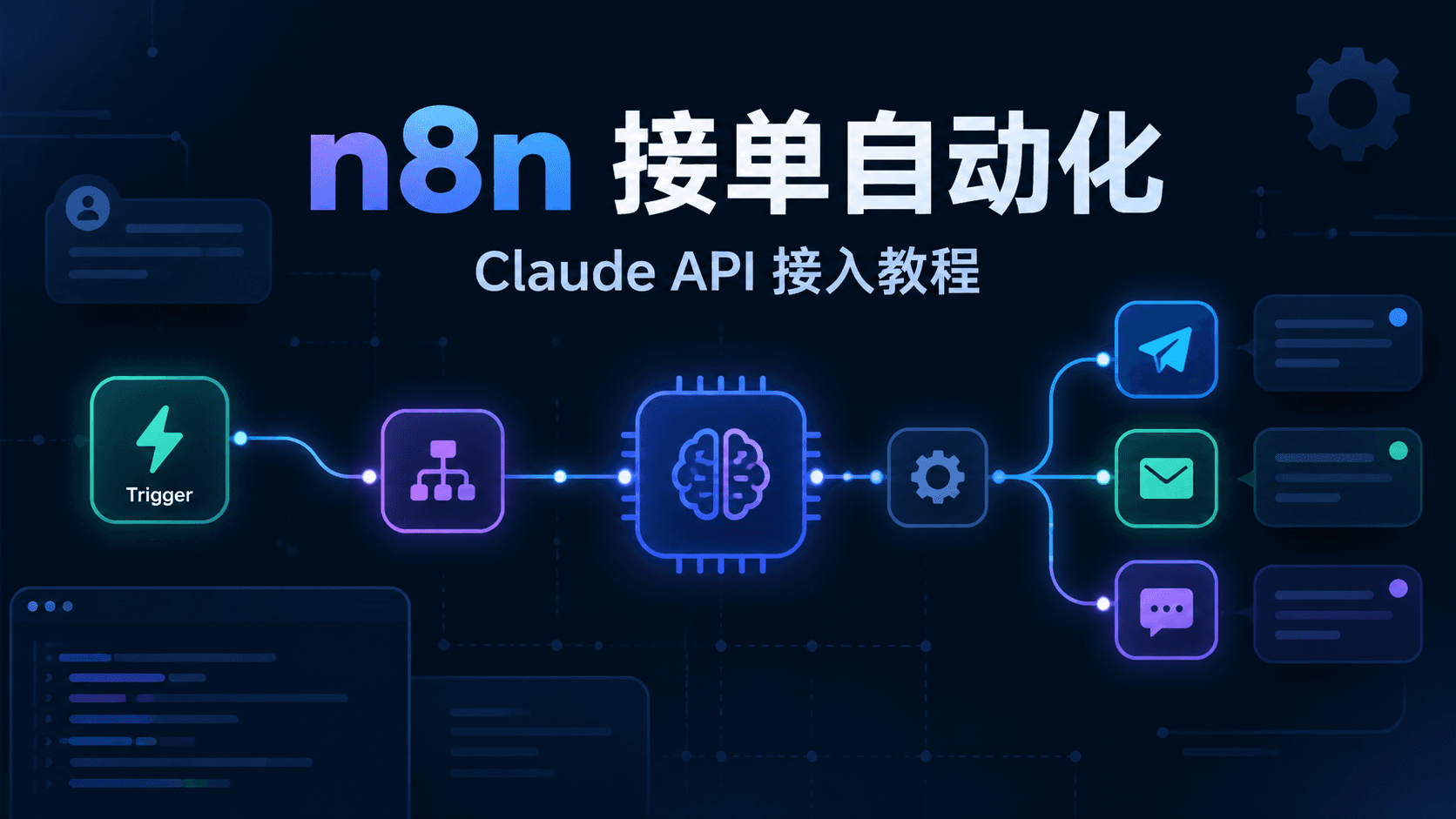
You do not need custom agent infrastructure to start. We built a complete order-automation workflow in a separate guide that uses exactly this two-tier pattern: new orders come in, a cheap model classifies and drafts replies, hard cases escalate to a stronger model. It runs on n8n with a HiAPI key and takes an afternoon to set up.
The workflow doubles as a template for any "route by difficulty" pipeline: webhook trigger, model call, conditional branch. Swap the prompt and the models, and the same skeleton works for support triage, content drafts, or data extraction.
FAQ
What is Notion AI Auto mode?
Auto mode is Notion's intelligent model routing feature, shipped in mid-October 2026 as part of its AI agent rebuild. When enabled, Notion automatically assigns each task to the model it judges most cost-effective, instead of using one premium model for everything. Notion claims this saves about 90% on average versus Opus 5.5 and Astra across 20+ use cases.
Who gets Notion's bring-your-own-key feature?
BYOK is currently an Enterprise-only alpha. Separately, ChatGPT Plus, Pro, and Go accounts can pay for a personal Notion Agent. Custom Agents are not covered by the ChatGPT account billing yet.
Can I connect a HiAPI key to Notion's built-in AI?
No. Notion's BYOK alpha does not support custom base URLs, so requests cannot be pointed at HiAPI's OpenAI-compatible endpoint. If you want model routing with your own key and transparent per-token pricing, the practical path is building the routing in your own stack, for example with HiAPI and a workflow tool like n8n.
How does one HiAPI key give access to many models?
HiAPI is an OpenAI-compatible gateway. You send requests to a single base URL (https://api.hiapi.ai) with one API key, and pick the model by name in each request, such as deepseek-v4.1-flash or claude-opus-4-8. Billing is aggregated per token across all models, so there is one balance and one invoice regardless of how many models you use.
Who is model routing actually for?
Two groups benefit most. Teams with high, repetitive AI volume save money by sending routine tasks to budget models. Builders shipping AI features keep quality high on hard cases without paying premium rates for every request. If you only make a handful of simple calls a day, routing saves little and one model is enough.
Is Auto mode worth enabling if I use Notion AI?
If your Notion AI usage is on the Business plan, enabling Auto mode costs nothing extra and, per Notion's own numbers, roughly 90% cheaper than premium-model defaults across common use cases. The tradeoff is less control over which model answers, so for high-stakes writing you may still want to spend Select credits on a specific model.
Takeaways
- Notion made model routing mainstream: Auto mode picks the cheapest adequate model per task, and Notion claims ~90% savings versus premium models on 20+ use cases.
- BYOK remains an Enterprise alpha without custom base URL support. There is no honest way to point Notion's native AI at a HiAPI key today.
- The builder equivalent is a multi-model gateway: one HiAPI key, one OpenAI-compatible endpoint, routine work on deepseek-v4.1-flash ($0.44/M input as of Oct 2026), complex work on claude-opus-4-8.
- You can have a working routed workflow today with n8n and a HiAPI key, no custom agent framework required.