Dreamina — ByteDance's AI image-and-video app, known in China as Jimeng (即梦) — is a genuinely good consumer creation tool. You open a browser or the mobile app, type a prompt, and get stills or short clips with editing, lip-sync, and camera control baked in. For hand-making a few pieces, it's hard to fault.
But if you're searching for a "Dreamina alternative," you're usually not looking for another app to click around in — you want to generate images and video from your own code: in a backend, a batch job, a product feature, a content pipeline. That's where a consumer app runs out of road. As of 2026, there's no widely available official public developer API for Dreamina itself; programmatic access to its underlying models mostly surfaces through third-party resellers.
Here's the part those "alternative" posts tend to bury: Dreamina is powered by ByteDance's own Seedream (image) and Seedance (video) engines — and both are callable directly on hiapi, alongside flagship alternatives from Google, Kuaishou, and Black Forest Labs. One API key, one async /v1/tasks contract, pay-per-call. This guide maps the Dreamina workflow onto six models you can wire into production today.
All prices below were pulled from hiapi's live pricing page on 2026-10-15. If anything has shifted since, that endpoint is canonical.
When you need an API, not an app
Dreamina is built for a person at a screen. An API is built for a system. You've outgrown the app the moment you need to:
- Generate from your backend — render images or clips triggered by user actions, not manual prompting.
- Batch and automate — hundreds of product shots or ad variants on a schedule, not one at a time.
- Control cost per unit — pay per image or per second of video, and forecast it, instead of burning app credits.
- Keep outputs consistent — the same model, parameters, and seed logic on every call, versioned in your code.
- Mix image and video in one pipeline without juggling separate tools and logins.
If none of those apply, stay in Dreamina — it's a fine app. If any of them do, the rest of this is the migration map.
The image side: Nano Banana 2, Seedream 5.0 Pro, FLUX.2
hiapi's three flagship still-image models cover the jobs Dreamina's image generator is used for — posters, product shots, social creative, signage — with a clear division of labor:
| Model | Vendor | Best at | Resolution | Price from |
|---|---|---|---|---|
| Nano Banana 2 | Versatile all-rounder, text rendering, speed | up to 4K | $0.036/img (1K) | |
| Seedream 5.0 Pro | ByteDance | Photoreal product & scene fidelity | 1K / 2K | $0.05/img (1K) |
| FLUX.2 | Black Forest Labs | Prompt adherence, editorial design | 0.5–4 MP | $0.0375/img (0.5 MP) |
Text that renders: the same prompt, two models
One thing consumer tools famously fumble is legible text inside an image. Here's the identical prompt run through Nano Banana 2 and FLUX.2 — no edits, no retries:
A photorealistic storefront chalkboard A-frame sign reading MORNING ROAST / Single-Origin Pour-Over / Open 7am to 2pm with a chalk coffee-cup doodle, sunny cafe sidewalk
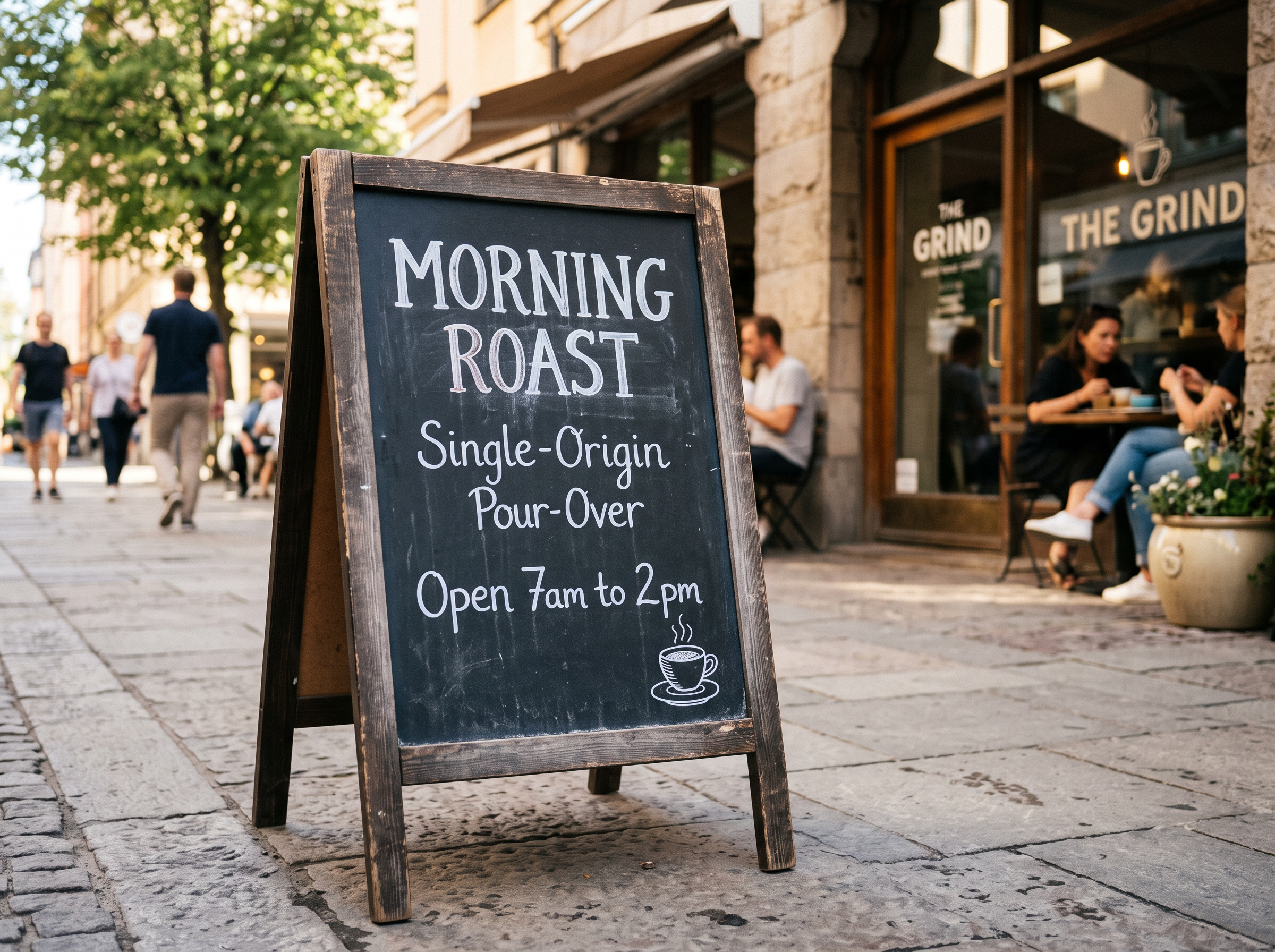 Nano Banana 2: crisp documentary realism; every line of signage copy spelled correctly.
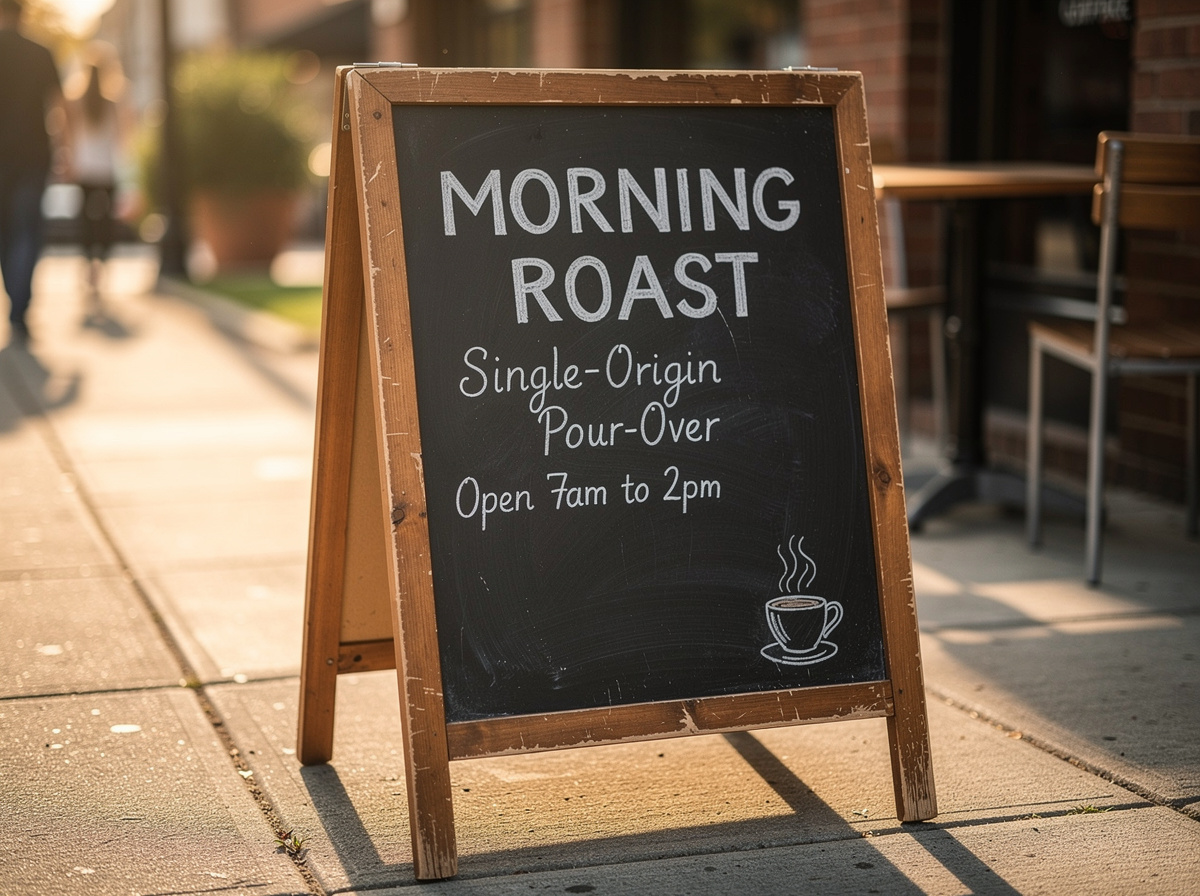 FLUX.2: the same copy, rendered just as cleanly, with a softer golden-hour grade.
Both nail the text — which is the point. Short signage and headline copy that an app might garble come back legible from either model; the real decision is aesthetic (Nano Banana 2's crisp realism vs FLUX.2's warmer cinematic look) and price (Nano Banana 2 starts at $0.036/img at 1K; FLUX.2 at $0.0375 for a 0.5 MP render, up to $0.125 at 4 MP). For a deeper head-to-head, see FLUX.2 vs Nano Banana 2.
Photoreal product work: Seedream 5.0 Pro
When the brief is "make it look real," Seedream 5.0 Pro — ByteDance's flagship, and one of the two engines behind Dreamina — is the reach. This is a single text-to-image call, no reference photo:
Photorealistic studio product photograph: a matte stoneware espresso cup and saucer on a polished walnut countertop, delicate wisps of steam rising, a softly blurred warm cafe interior with morning sunlight through a window behind, rich natural color grading, fine surface texture, subtle condensation and crema detail, editorial food-and-beverage photography, 35mm cinematic look, shallow depth of field.
 Seedream 5.0 Pro at 1K ($0.05/img): steam, crema, and wood grain hold up at product-photography scale.
Seedream renders in-image text well too and runs 1K/2K across eight aspect ratios. If product and poster realism is your bar, compare it against GPT Image in GPT Image 2.5 vs Seedream 5.0 Pro.
Posters and marketing creative
Need a finished poster — headline, subhead, and product in one shot? That's squarely what these models replace the app for:
 Nano Banana 2, one prompt: headline, subhead, and product composed with correct spelling and generous negative space.
For the wider image lineup — including budget and specialty models — see Best AI Image Generation APIs in 2026 and the GetImg AI API alternative breakdown.
The video side: Veo 3.1, Kling 3.0 Omni, Seedance 2.5
Dreamina's video is powered by ByteDance's Seedance line. On hiapi you can call Seedance 2.5 directly, plus Google's Veo 3.1 and Kuaishou's Kling 3.0 Omni as alternatives — all three with native audio:
| Model | Vendor | Pricing (per second) | Max res | Longest single shot | Native audio |
|---|---|---|---|---|---|
| Kling 3.0 Omni | Kuaishou | $0.10/s (720p) → $0.479/s (4K) | 4K | multi-shot | Optional (+audio tier) |
| Veo 3.1 | $0.57/s w/audio · $0.29/s silent (HD) | 4K | 8s / generation | Yes | |
| Seedance 2.5 | ByteDance | $0.204/s (720p) · $0.516/s (1080p) | 1080p | 30s single shot | Yes |
Here's a real Seedance 2.5 clip — a single continuous take, start to finish, straight from the /v1/tasks API:
A single continuous take: a barista's hands grind coffee beans, tamp the grounds into a portafilter, then lock in and pull a slow espresso shot under warm cafe lighting, camera slowly pushes in on the crema forming, natural cafe ambience, photorealistic, 16:9
The quick decision rules:
- Kling 3.0 Omni is the per-second floor at $0.10/s (720p) and still reaches 4K — the pick when you're rendering many variants and unit cost compounds. Audio is an opt-in flag, so you only pay for it when a shot needs sound.
- Veo 3.1 is the premium cinematic + native-4K choice with synchronized audio; the trade-off is an 8-second cap per generation.
- Seedance 2.5 is the only one that sustains a true 30-second single shot, with native audio and seven aspect ratios — closest in spirit to Dreamina's own Seedance mode, now callable directly.
Because this is the same comparison people run for other tools, we've already gone deep: see Kling 3.0 vs Veo 3.1, Seedance 2.5 vs Veo 3.1, the Gemini Omni alternative write-up, and Best AI Video Generation API in 2026.
One key, one API: how you call it
Every model above — image or video — uses the same async task protocol. You POST a job, poll until it's done, then download the output URL. Only the model string and a couple of input fields change:
# Generate an image (Nano Banana 2)
curl -s -X POST https://api.hiapi.ai/v1/tasks \
  -H "Authorization: Bearer $HIAPI_KEY" \
  -H "Content-Type: application/json" \
  -d '{
    "model": "nano-banana-2",
    "input": {
      "prompt": "A photorealistic storefront chalkboard A-frame sign reading MORNING ROAST ...",
      "aspect_ratio": "4:3",
      "resolution": "2K"
    }
  }'
# -> { "data": { "taskId": "..." } }

# Same shape, now a video (Seedance 2.5) — just swap the model + input fields
curl -s -X POST https://api.hiapi.ai/v1/tasks \
  -H "Authorization: Bearer $HIAPI_KEY" \
  -H "Content-Type: application/json" \
  -d '{
    "model": "seedance-2.5/text-to-video",
    "input": { "prompt": "A single continuous take ...", "duration": 10, "resolution": "1080p" }
  }'

# Then poll until status == "success" and read data.output[0].url
curl -s https://api.hiapi.ai/v1/tasks/<taskId> -H "Authorization: Bearer $HIAPI_KEY"
One key covers stills and video, so a Dreamina-style "images and clips from one place" workflow becomes a handful of HTTP calls you control.
Pricing: pay per call, not per seat
The structural difference from a consumer app is the billing model. Dreamina-style tools meter you in credits against a subscription; hiapi bills the actual work:
- Images are per-image: from $0.036 (Nano Banana 2, 1K) to $0.125 (FLUX.2, 4 MP). Seedream 5.0 Pro is $0.05 (1K) / $0.10 (2K).
- Video is per-second: from $0.10/s (Kling 3.0 Omni, 720p) up to premium 4K tiers. A 10-second 1080p Seedance 2.5 clip is 10 × $0.516 = $5.16; the same length on Kling 3.0 Omni at 720p is about $1.00.
You can forecast spend straight from your own call volume and resolution. The full, current matrix lives on the pricing page.
If you used Dreamina for… use this
- Quick social images with text → Nano Banana 2 (cheapest, strong text, up to 4K).
- Photoreal product / poster shots → Seedream 5.0 Pro (or compare FLUX.2 for design-led work).
- Design-forward, prompt-faithful images → FLUX.2.
- High-volume video variants on a budget → Kling 3.0 Omni ($0.10/s floor).
- Short, cinematic, native-4K hero clips → Veo 3.1.
- Long single-take clips (up to 30s) → Seedance 2.5 — the closest match to Dreamina's own Seedance mode.
FAQ
Does Dreamina have a public API?
As of 2026, ByteDance doesn't offer a widely available official public developer API for Dreamina (Jimeng) itself — it's a consumer web and mobile app. Programmatic access to its underlying Seedream and Seedance models mostly shows up through third-party resellers. If you need an API you can build on, hiapi exposes those same ByteDance models plus alternatives directly.
Can I generate both images and video with one API key?
Yes. On hiapi, stills (Nano Banana 2, Seedream 5.0 Pro, FLUX.2) and video (Veo 3.1, Kling 3.0 Omni, Seedance 2.5) all run through the same /v1/tasks endpoint and the same key — you only change the model string.
Does hiapi have the same models Dreamina uses?
In large part, yes. Dreamina runs on ByteDance's Seedream (image) and Seedance (video) engines; hiapi offers Seedream 5.0 Pro and Seedance 2.5 directly, so you can call the same families Dreamina is built on — with Google and Kuaishou flagships added as alternatives.
What's the cheapest Dreamina alternative on hiapi?
For images, Nano Banana 2 at $0.036/img (1K). For video, Kling 3.0 Omni at $0.10/s (720p, silent). The cheapest choice depends on the exact resolution and clip length you need, so price your real spec on the pricing page.
Do the video models generate audio?
All three — Veo 3.1, Kling 3.0 Omni, and Seedance 2.5 — support native audio. Veo 3.1 and Seedance 2.5 produce synchronized sound by default; Kling 3.0 Omni makes it an opt-in flag (reflected in its +audio pricing tier), so you only pay for sound when a shot needs it.
Start building
The fastest way to decide is to run your own brief through a few models. Grab an API key and open the model pages — Nano Banana 2, Seedream 5.0 Pro, and Seedance 2.5 — then fire the same /v1/tasks request at each. One key, image and video, and the only tie-breaker that matters: which output fits your product.