If you've searched for a Recraft V4 alternative, you're usually not asking whether Recraft makes good design assets — it does. You're solving for something more specific:
- You already call hiapi for images or video and you don't want a separate design-tool subscription, a separate account, and a separate credit bucket just to generate posters and logos.
- You need the words inside the image to be correct — headlines, dates, legal lines, brand marks — not "close enough" text that you have to redo by hand.
- You want to generate design assets from the same API you already use, pay per image, and keep one bill.
This piece runs the real test. We took one original poster prompt, sent the identical prompt through two hiapi models — ideogram-v4 and flux-2 — and compared the actual outputs, down to the fine print. Everything below is generated on hiapi for this article; nothing is a mockup.
Why "Typography-First" Is the Real Requirement
The reason people reach for a tool like Recraft V4 in the first place is rarely "I need a pretty picture." It's "I need a finished piece of design" — a poster where the date is spelled right, a logo lockup where the brand name is exact, a banner where the tagline reads cleanly. The hard part of design-oriented image generation is not the art direction. It's accurate in-image text.
So that's the bar a Recraft alternative has to clear. On hiapi, two models cover it from different angles:
- ideogram-v4 — the typography specialist. It's built for posters, logos, and layouts where the lettering has to be exact, with three speed tiers (TURBO / BALANCED / QUALITY) so you can trade cost for polish.
- flux-2 — the high-fidelity generalist. Strong prompt adherence, photoreal rendering, and good (not perfect) in-image text, priced by output resolution.
For the full background on ideogram-v4's typography positioning, see our Ideogram API overview.
The Test: One Prompt, Two Models
We wrote a single poster prompt designed to stress text rendering — a headline, a subtitle, a divider, and three lines of small print including a date and a less-common place word. Here is the exact prompt, copy-paste ready:
Editorial event poster, portrait layout, warm off-white paper background.
Large display headline centered reading 'LETTERFORMS 2026' in a bold geometric
sans-serif. Thin subtitle beneath reading 'The Typography and Brand Design Summit'.
A slim horizontal rule, then three stacked smaller lines: 'April 18-20',
'Lisbon - Pavilion A', 'Early-bird passes now open'. A single deep-teal abstract
ligature mark as the hero graphic above the title. Swiss editorial design, precise
kerning, balanced margins, all text crisp and perfectly legible.
ideogram-v4 (BALANCED)
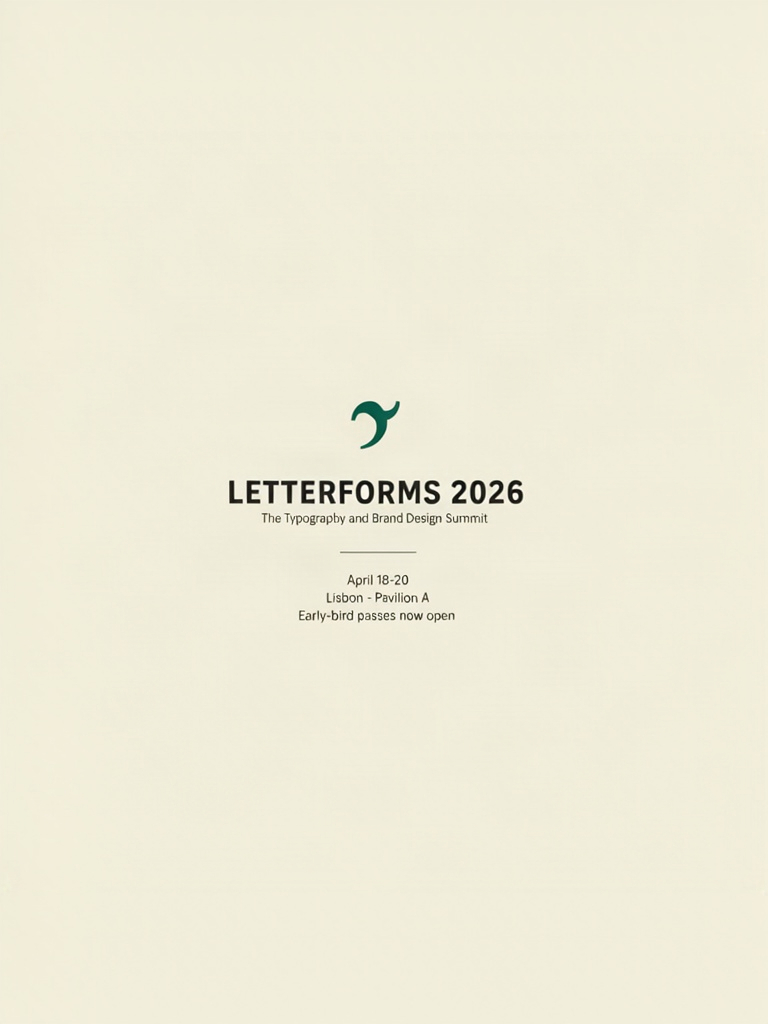
ideogram-v4 rendered every line exactly: the headline, the subtitle, the divider rule, and all three lines of small print — including Lisbon - Pavilion A, the line most likely to trip a model up. Restrained, letter-perfect, print-ready as-is.
flux-2 (1 MP, same prompt)
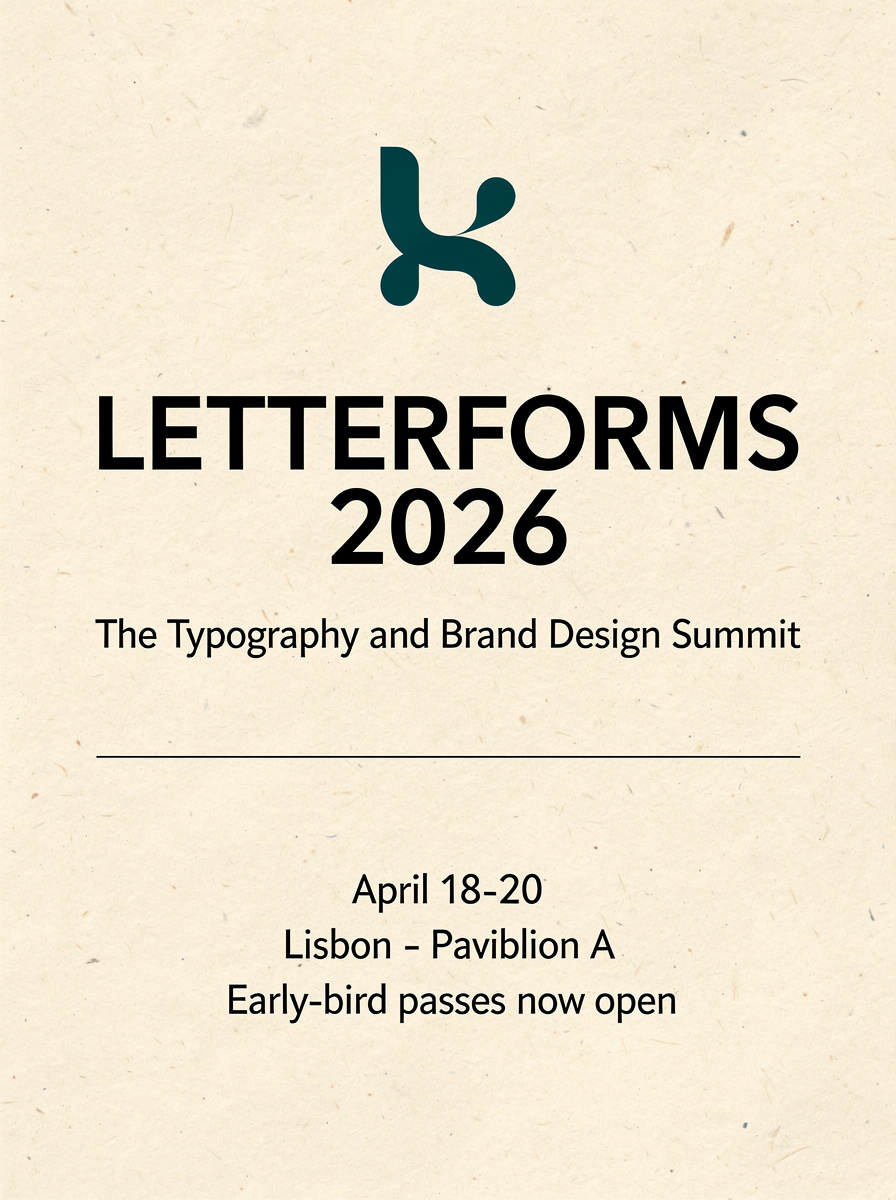
flux-2 produced a bolder, more graphic headline — the display type has real punch, and the layout feels more like a contemporary print poster. But on the same prompt it slipped on the fine print: the venue line came back as Lisbon - Paviblion A ("Pavilion" misspelled). The headline, subtitle, date, and CTA line were all correct.
That single difference is the whole decision in miniature, and it matches each model's design intent:
- Reach for ideogram-v4 when the words must be right — multi-line posters, labels, anything with dates, prices, or proper nouns. In our test it was exact on the first run.
- Reach for flux-2 when you want graphic punch or photoreal fidelity and the text is short or secondary — a hero image with one big word, a product scene, a key-art background.
Design red line, same as any production asset: always eyeball the rendered text before you ship it. Both models are strong, but "strong" is 99%, not 100% — we caught the
Paviblionslip only by reading the output. (This is exactly what we did for this article's images.)
Beyond Posters: Logos and Product Design
Typography isn't only posters. Two more real outputs from the same two models:
Brand marks — ideogram-v4. A circular coffee-brand lockup, generated by ideogram-v4, with the wordmark and the "established" line both rendered cleanly:
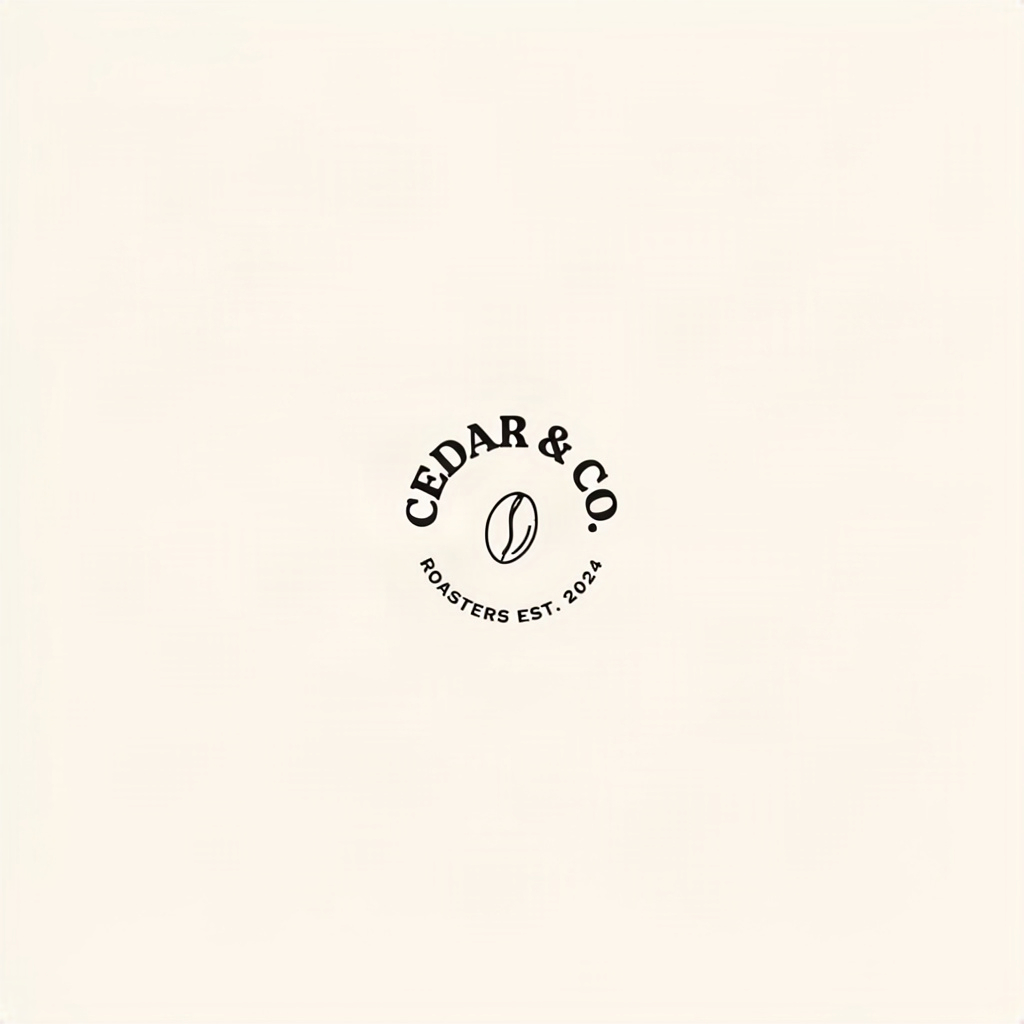
This is ideogram-v4's sweet spot: curved baseline text, small type, and a mark that stays readable — the kind of lockup where one wrong letter means a reprint.
Product and key art — flux-2. Where flux-2 pulls ahead is photoreal rendering. Matte-black wireless earbuds with a teal rim light, floating in a dark studio, no text required:
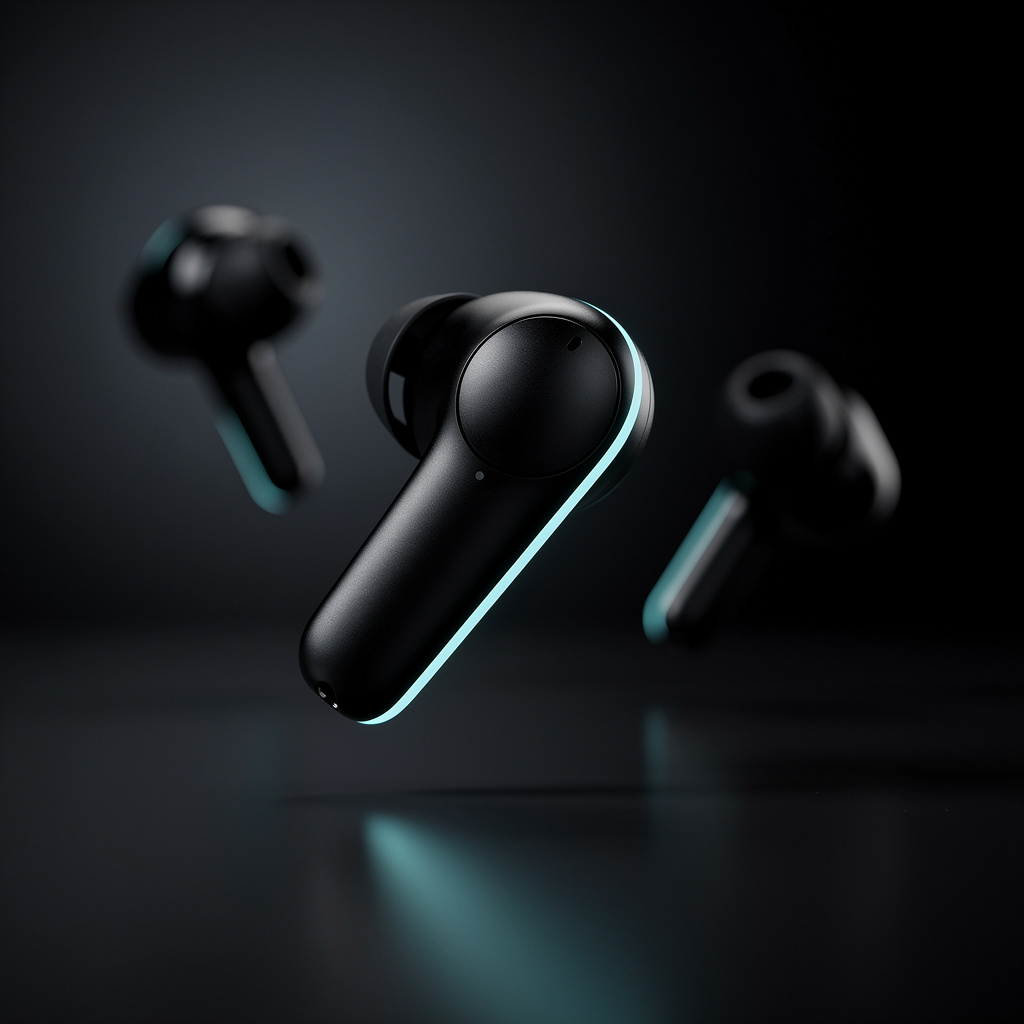
For a product hero, a launch background, or an atmospheric scene, flux-2's fidelity and lighting do more of the work — and you can always add typography in your layout tool on top.
How This Compares to Recraft V4
A fair comparison means being honest about the trade-off. Recraft V4 is a dedicated design tool with its own ecosystem — style sets, brand-consistency controls, and vector/SVG export baked into a design-first UX. If your workflow lives inside that app and you specifically need native vector output, a dedicated design tool is still the better home for that one job.
The hiapi route trades the bundled design UX for something different:
- API-native, pay-per-image access. No monthly credit allowance that resets whether you used it or not. You pay for the images you generate, full stop.
- One key for everything. ideogram-v4 and flux-2 run through the same
POST /v1/tasksendpoint as the rest of hiapi's image, video, and audio models. No fourth vendor, no fourth account, no second credit system to reconcile. - Two specialists instead of one generalist. You pick ideogram-v4 for text-critical work and flux-2 for fidelity-critical work, rather than hoping one model is best at both.
If you want a broader model-by-model view of the typography tier, our ideogram-v4 vs Nano Banana 2 comparison covers the other strong option on the platform.
What It Costs
Both models are pay-as-you-go, priced per image, with no subscription — verify current numbers on the hiapi pricing page:
- ideogram-v4 bills by render speed: $0.05 (TURBO), $0.10 (BALANCED), $0.17 (QUALITY) per image. The poster above was BALANCED.
- flux-2 bills by output resolution: $0.0375 (0.5 MP), $0.05 (1 MP), $0.075 (2 MP), $0.125 (4 MP) per image.
That means a letter-perfect BALANCED poster from ideogram-v4 costs ten cents, and you can drop to TURBO for drafts and reserve QUALITY for the final. With flux-2 you dial cost against resolution the same way.
Call It From the API
Both models use the standard hiapi task flow: submit a task, poll until it's done, download the output URL. A minimal ideogram-v4 request:
curl -X POST https://api.hiapi.ai/v1/tasks \
  -H "Authorization: Bearer $HIAPI_KEY" \
  -H "Content-Type: application/json" \
  -d '{
    "model": "ideogram-v4",
    "input": {
      "prompt": "Minimalist bakery logo lockup: GOLDEN CRUST, ARTISAN BREAD, on cream",
      "rendering_speed": "BALANCED",
      "aspect_ratio": "1:1"
    }
  }'
For the full request/response walkthroughs (including flux-2's resolution field), see How to use ideogram-v4 and the flux-2 text-to-image API guide.
FAQ
Is there a free Recraft V4 alternative? Not a truly free one that produces production-grade typography. But on hiapi the floor is low: ideogram-v4 TURBO is $0.05/image and flux-2 at 0.5 MP is $0.0375/image, pay-as-you-go, so you're not committing to a monthly plan to test it.
Which is better for logos — ideogram-v4 or flux-2? ideogram-v4. Logos are small, text-critical, and often use curved baselines — exactly where ideogram-v4's text accuracy matters most. In our tests it rendered wordmarks and "established" lines cleanly. Use flux-2 when the brand asset is photoreal (a product shot, a packaging render) rather than type-driven.
Can I get vector/SVG output like Recraft? No — both ideogram-v4 and flux-2 output raster images. If you need native SVG, that's the one job a dedicated vector design tool still does better. For raster posters, logos-as-images, and key art inside an API workflow, the two hiapi models cover it; vectorize downstream if you need to.
How much does it cost per image? ideogram-v4: $0.05 / $0.10 / $0.17 (TURBO / BALANCED / QUALITY). flux-2: $0.0375 / $0.05 / $0.075 / $0.125 (0.5 / 1 / 2 / 4 MP). Per image, no subscription. Check the pricing page for the current rates.
Do I need a separate account or design subscription? No. Both run on your existing hiapi key through the same task API you'd use for any other model — one account, one bill.
Key Takeaways
Start with ideogram-v4 when the text has to be exact, reach for flux-2 when fidelity or graphic punch leads, and run both from the one API you already have. The ten-minute test above is worth repeating with your own brief before you commit a design workflow to either model.
Ready to try it? Open the ideogram-v4 model page, drop in a poster or logo prompt, and compare it against flux-2 on the same prompt — same key, same bill.