Blog
AI Image & Video API Guides
Hands-on model tests, production tutorials, prompt techniques, and current API pricing for generative media teams.

Vidu Q4 Preview Reference-to-Video for Narrated, Branded Short-Form Video
A full end-to-end workflow: one brand kit (two reference images + one voice sample) drives a finished 14-second 9:16 short built from three vidu-q4-preview/reference-to-video clips. reference_image_urls (1-15) locks the character and product across clips; reference_audio_urls (up to 3) locks the narrator voice - use the exact name, voice_reference_urls is rejected. 4K returns 2160x3840 HEVC/H.265 and must be re-encoded to H.264; 1080p returns 1080x1920 H.264 ready for the feed. Batch the clips async then poll - wall-clock is the slowest clip, not the sum; download output URLs immediately because they expire. Per-second flat pricing: 1080p $0.1375/s, 4K $0.446/s; the three-clip short cost $3.16 of video.
Ideogram V4 API Pricing: TURBO vs BALANCED vs QUALITY
TURBO $0.05, BALANCED $0.10, QUALITY $0.17. All three tiers rendered the text correctly. Start text-led posters on TURBO.
Kling 3.0 Motion Control API Pricing: $0.10 per Second at 720p
$0.10 per second at 720p, $0.172 at 1080p. Output length follows the 3–30 s reference video. A 6-second 720p clip costs $0.60.
Veo 3.1 Fast vs Veo 3.1 Lite: Is 2.5× the Price Worth It?
Lite is $0.10/s at 720p with sound; Fast is $0.25. Only Fast outputs 4K. Lite followed our prompt more closely.

Seedream 4.5 API Pricing: $0.045 per Image, 4K Included
$0.045 per image, same at 2K and 4K. Image-to-image costs the same, up to 14 references. Seedream 5.0 Lite is $0.035, a cent less.

Veo 3.1 API Guide: Your First Video in 5 Minutes
Three tiers, text-to-video and image-to-video at the same price. Lite 720p without sound is $0.06/s; Fast $0.25/s; standard $0.57/s with sound. Tune prompts on Lite, then switch model for the final render.

How to Use the vidu-q4-preview Reference-to-Video API (curl + Python)
A copy-paste integration guide for vidu-q4-preview/reference-to-video on hiapi's async /v1/tasks API: submit one POST that blends 1-15 reference stills (plus up to 3 optional voice clips) into a 3-16s clip at up to 4K, then poll or take a callback and download the MP4. The schema is live-probed with free invalid-value 400s: resolution (540p/720p/1080p/2k/4k), duration (int 3-16), aspect_ratio enum, required reference_image_urls (1-15), and the voice field reference_audio_urls (<=3) - the natural guess voice_reference_urls is rejected. Production notes that matter: failed renders return HTTP 200 with data.status 'fail', callbacks fire once (when:'final') and must dedupe on taskId, output URLs expire, and 4K is delivered as HEVC/H.265 so re-encode to H.264 for browser embeds.
Google Imagen 3 Alternative: 3 High-Fidelity Image APIs, One Integration
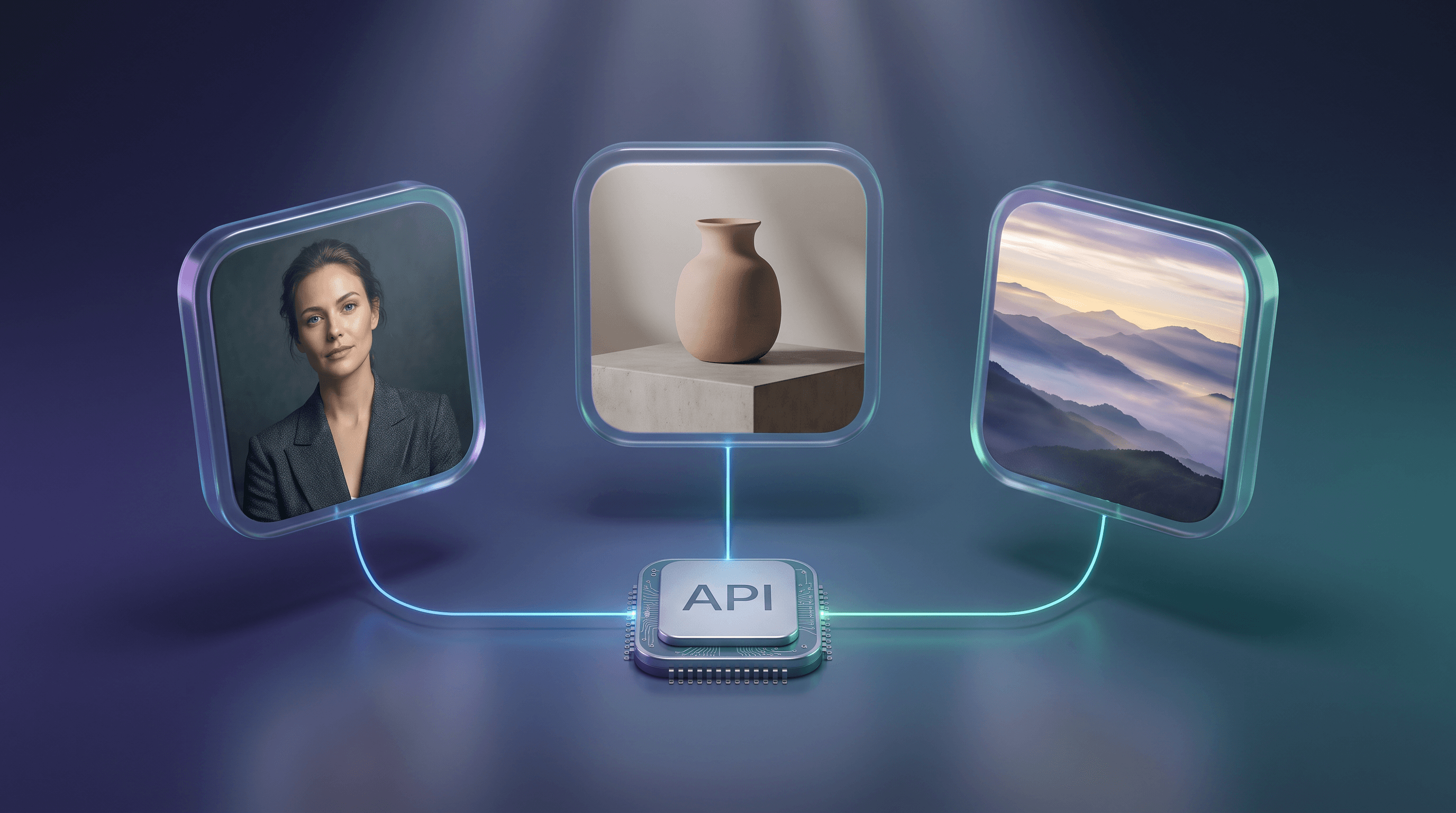
Google retired the Imagen 3 API (imagen-3.0-generate-002 shut down Nov 10, 2025), and the broader Imagen line is being deprecated through 2026 — so an 'Imagen 3 alternative' is really a migration. hiapi hosts three high-fidelity replacements on one task API: nano-banana-pro (Gemini-tier), flux-2/text-to-image, and wan2.7-image/text-to-image. In a same-prompt head-to-head, all three rendered two-line in-image text cleanly; the differences were stylistic, not competence. Switching models is a one-line change to the model field — no Google Cloud project, no re-integration when a single model gets retired.
Hailuo 2.3 vs Kling 3.0: Which Video Generation API Should You Use in 2026?
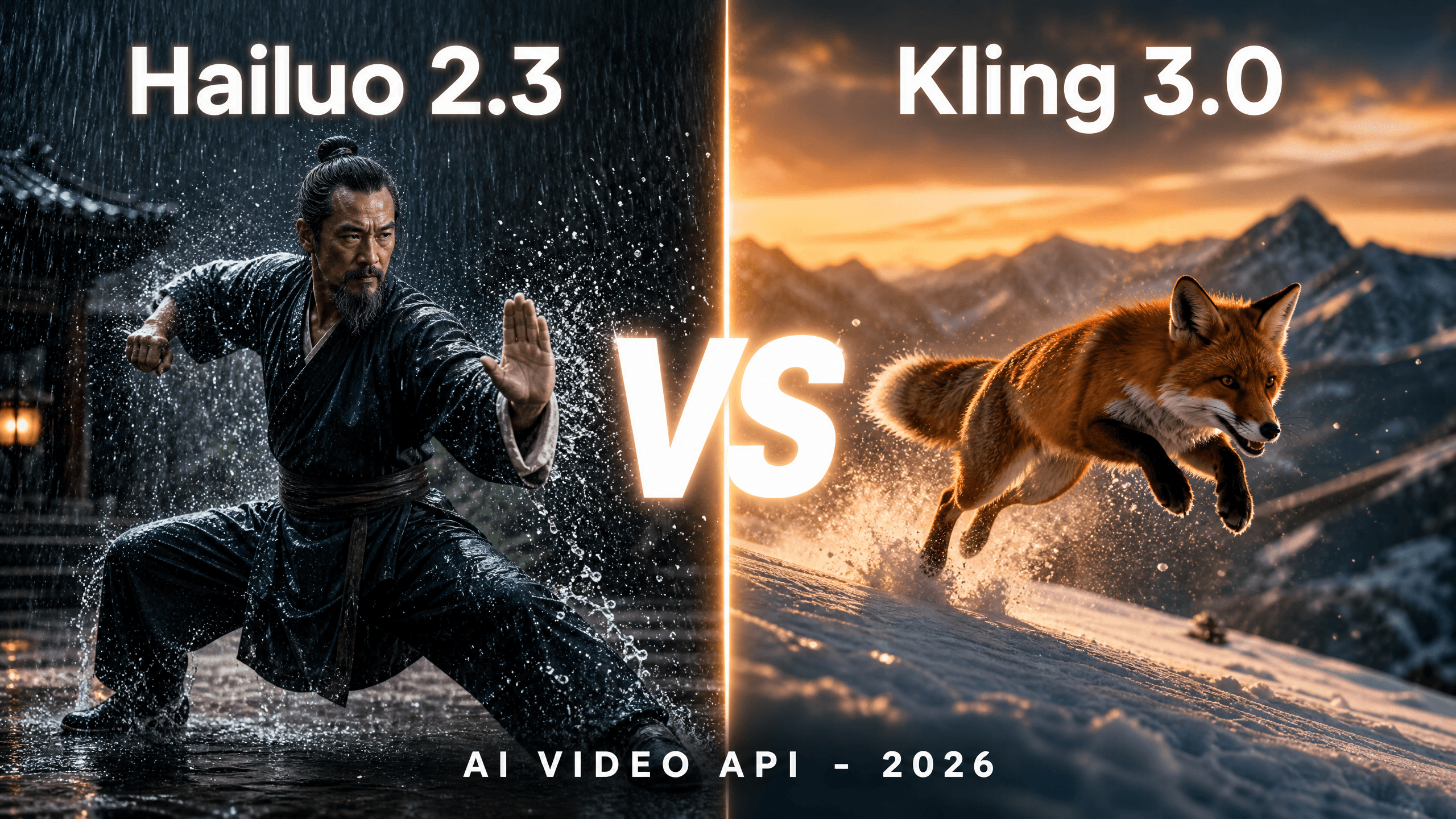
Both Hailuo 2.3 and Kling 3.0 are live on HiAPI and run on the same POST /v1/tasks async API, so switching between them is a one-line model-ID change. Hailuo 2.3 is billed flat per clip - $0.40 for 6 seconds, $0.80 for 10 - with three input fields and no resolution or audio controls. Kling 3.0 is billed per second ($0.10-$0.479 by tier) and adds resolution up to 4K, three aspect ratios, 3-15s duration, and optional native audio. For a plain 6- or 10-second silent clip, Hailuo is cheaper than Kling at every resolution tier; the Kling premium buys audio, 4K, aspect ratio, and flexible length.

Seedream 5.0 Pro vs Nano Banana Pro: Which Image Generation API Wins in 2026?
At 1K, Seedream 5.0 Pro is slightly cheaper ($0.05 vs $0.057); at 2K, Nano Banana Pro costs far less ($0.057 vs $0.10). Only Nano Banana Pro reaches 4K ($0.10); Seedream 5.0 Pro stops at 2K. Both rendered all signage and label text correctly in three matched tests — they differ in style, not spelling. Seedream leans clean and catalog-ready; Nano Banana Pro leans art-directed and editorial. Both run on one HiAPI key via the same /v1/tasks API, so you can send one prompt to each and pick per image.
Build with the models you just read about.
Compare image, video, and audio models, then use the same API workflow in production.