Blog
AI Image & Video API Guides
Hands-on model tests, production tutorials, prompt techniques, and current API pricing for generative media teams.

Qwen-Audio 3.0 TTS Plus for E-Commerce Voiceovers
Qwen-Audio 3.0 TTS Plus turns a short product script into a clean MP3 voiceover in a few seconds, at roughly $0.04 per 1,000 characters. It handles bilingual Chinese/English scripts inside a single request, which fits cross-border listings that mix languages mid-sentence. The schema is intentionally small — text, voice (2 choices), format, sample_rate, pitch, and volume — with no emotion or speed controls, so pacing has to come from how the script itself is punctuated. Output files default to temporary storage with about a 7-day link lifetime, so a production pipeline needs to re-host the MP3 immediately rather than treat the returned URL as permanent.

DeepSeek V4 Flash for E-commerce: Catalog Copy, Support Replies & Tool Calls
deepseek-v4-flash is a text-only model on the hiapi API — no image or video output — but it's genuinely cheap and capable for e-commerce text work like catalog copy, policy-grounded support replies, and tool-calling order lookups. Three real API calls measured actual costs of $0.00031 (batch catalog copy, JSON mode), $0.00028 (policy-grounded support reply), and $0.00008 (tool-calling order lookup), roughly 35-38x cheaper than the same token counts on kimi-k3. A live-tested caveat: setting thinking.type to disabled did not eliminate reasoning tokens or reasoning_content in our testing, so budget from measured usage rather than the parameter name alone.

Free AI Image Generator API With an API Key (2026)
Three real free API keys for AI image generation exist in 2026: Hugging Face ($0.10/month), Stability AI (~$0.25 one-time, estimated), and hiapi's Newbie Task System (up to $1.00 one-time). hiapi's credit is the only one that spends against a full multi-model catalog (GPT Image 2, Nano Banana, z-image) through the same production /v1/tasks endpoint paid traffic uses. Which model you point a free credit at matters as much as which provider you pick: z-image runs roughly 37x more images per dollar than nano-banana-pro on hiapi. None of the three replaces a paid plan at real volume; treat them as a way to confirm a model works before you commit spend.
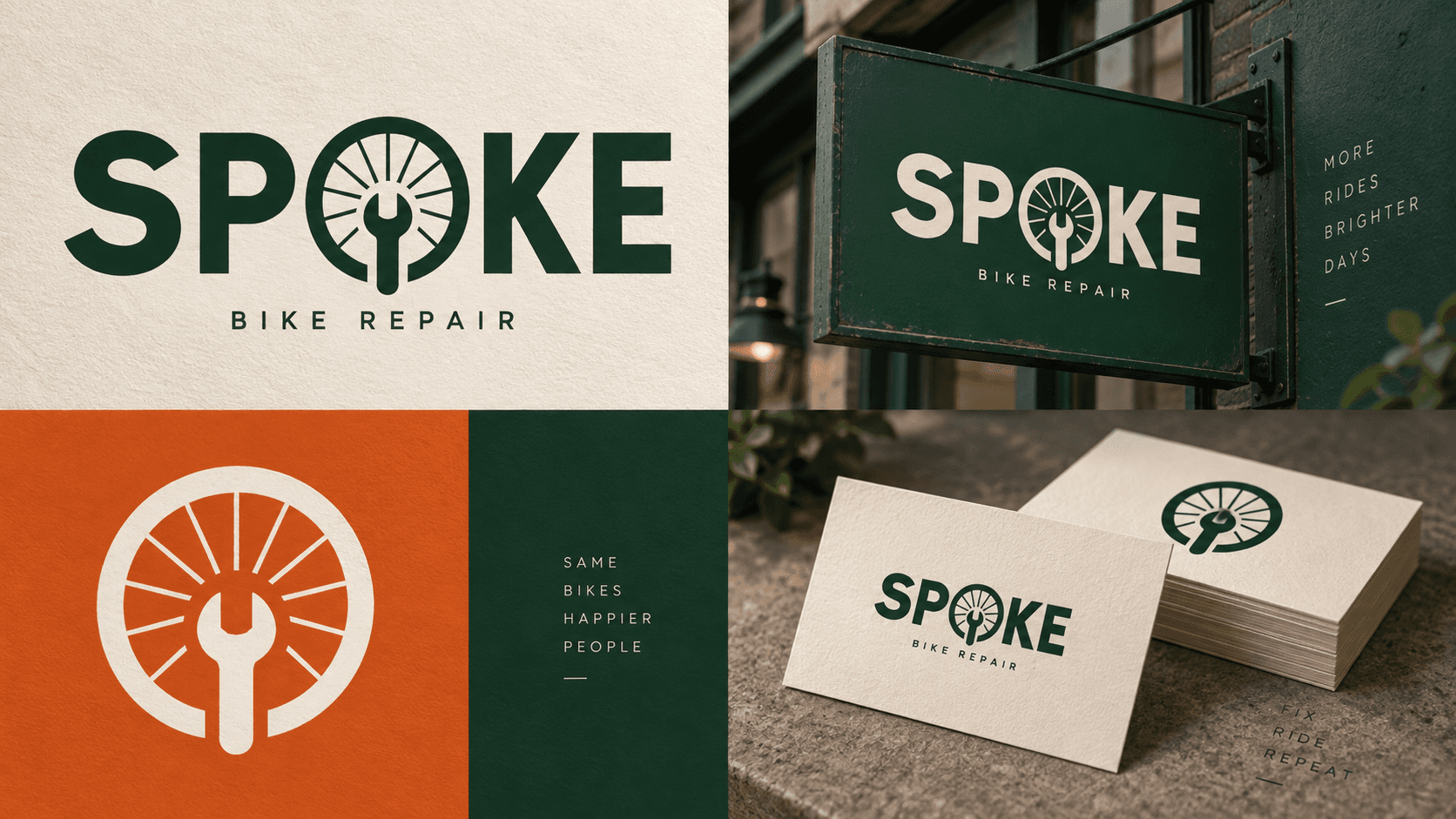
GPT Image 2 logo design: What still needs work after generation?
Three SPOKE examples show a logo, reverse mark, and avatar. The name is preserved while the spokes and wrench change between versions. Choose one drawing for the final set; a PNG needs redrawing for editable vector paths.

How to use GPT Image 2.5: Generate an image, then change one color
Use Text to Image for a first draft and upload an existing image to edit it. Name the object to recolor and the parts you want to preserve. The example shows a toolbox color edit and how to check the website crop.
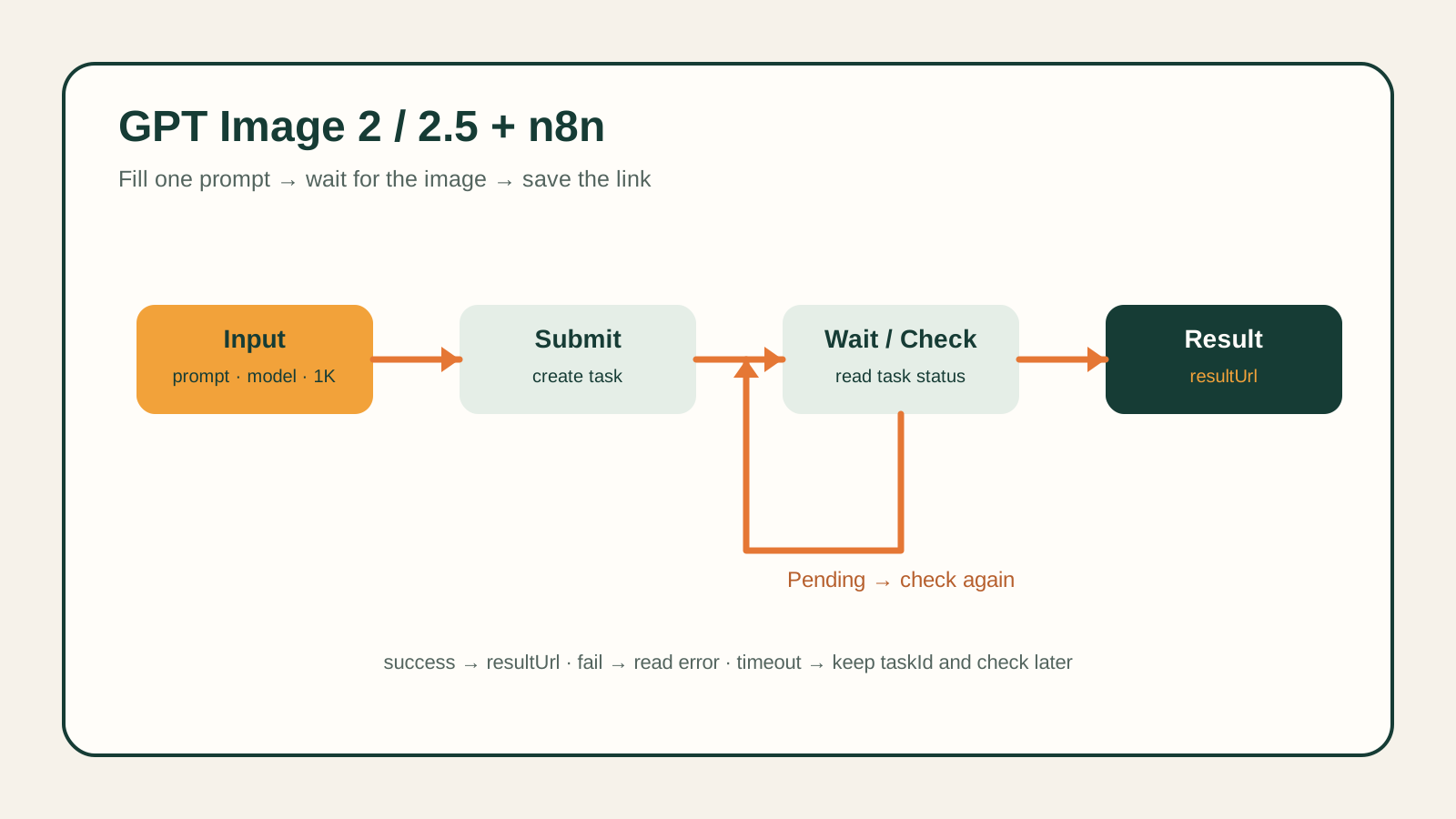
GPT Image 2 / 2.5 with n8n: The request worked. Where is the image?
Download the JSON, import it into n8n, and connect one Header Auth credential to both HTTP Request nodes. The template defaults to GPT Image 2.5 Flare text-to-image with a 1:1, 1K prompt. A timeout stops this workflow only; keep the taskId to query the same task later.
Claude Opus 4.8 for E-Commerce: Copywriting, Visual QA & Support via hiapi API
claude-opus-4-8 does not generate images -- despite the Vision tag, it's a text model that can read images, not create them. Its Vision input works in practice on the cheaper default hiapi route, even though that route's own model card doesn't mention image input (only the pricier @aws route's card does). For e-commerce, its real strengths are three text-driven jobs: grading existing product photos against QA rules, writing product copy, and drafting support replies. All three worked in the live tests below for about $0.013 combined, with zero image-generation cost. The @aws route costs exactly 2.5x the default route per token; for text/vision e-commerce work, default is the one to use.

How to Use Claude Opus 4.8 via the hiapi API
Claude Opus 4.8 is available on hiapi through the standard OpenAI-compatible /v1/chat/completions endpoint, not the async /v1/tasks flow used for media models. This guide walks through a minimal curl and Python request, then covers the production patterns: streaming via SSE, function/tool calls, and adaptive thinking. Includes the exact 401 error shape for bad auth and notes on why Chat Completions calls aren't idempotent the way /v1/tasks jobs are.
FLUX.2 Text-to-Image API: Parameters, Code, and a Working Example
A complete, working recipe for the flux-2/text-to-image API on hiapi: create a task on /v1/tasks, poll for success, download output[0].url. Only prompt is required - aspect_ratio, resolution, and output_format all have defaults, and the schema rejects any field it doesn't recognize. Pricing is tiered by resolution ($0.0375-$0.125/image), not flat like flux-1.1-pro, and "High Fidelity"/prompt adherence are model traits, not parameters you set.

How to Use the Nano Banana 2 API: A Complete Tutorial
Nano-Banana-2 runs on hiapi's unified async task API: POST /v1/tasks, poll GET /v1/tasks/{id} or use a callback, download data.output[0].url before it expires. Only prompt is required; aspect_ratio (15 values, default auto), resolution (1K/2K/4K, default 1K), and output_format (png/jpg) are all optional with defaults. Reference images go in image_input (up to 14 URLs) — not image_urls, which is the field name for the smaller Nano-Banana-2-Lite tier. The same call handles both text-to-image and image-to-image — adding image_input to an otherwise-identical request switches it into editing mode. For production use callback.url with when:'final' instead of polling, persist taskId for idempotent retries, and store image bytes rather than expiring signed URLs.
Build with the models you just read about.
Compare image, video, and audio models, then use the same API workflow in production.